
Last updated: August 2026
The best chess tactics book for you depends far more on your level and on how you want to train than on which book is “best” overall. For beginners, Peter Giannatos's Everyone's First Chess Workbook is the structured place to start, with Dan Heisman's Back to Basics: Tactics the better choice if you want the motifs explained before you drill them.
Club players are well served by Frank Erwich's 1001 Chess Exercises for Club Players, Charles Hertan's Forcing Chess Moves and Axel Smith and Hans Tikkanen's The Woodpecker Method, while stronger players should look at Mark Dvoretsky's Chess Tests and Efstratios Grivas's The Tactics Bible.
Every book in the list below is a print or e-book title you can buy on Forward Chess today.
Best chess tactics books at a glance
| Book | Author | Publisher | Year | Level | Best For |
|---|---|---|---|---|---|
| Everyone’s First Chess Workbook | Peter Giannatos | New in Chess | 2021 | Beginner | A structured first course of graded exercises |
| Back to Basics: Tactics | Dan Heisman | Russell Enterprises | 2007 | Beginner | Learning what each motif is before drilling it |
| Learn Chess the Right Way (5 volumes) | Susan Polgar | Russell Enterprises | 2016– | Beginner | A graded program rather than a single book |
| 1001 Chess Exercises for Club Players | Frank Erwich | New in Chess | 2019 | Club | Sustained drilling at 1500–2000 |
| Forcing Chess Moves | Charles Hertan | New in Chess | 2019 (4th ed.) | Club | Training yourself to look for forcing moves |
| The Woodpecker Method | Axel Smith & Hans Tikkanen | Quality Chess | 2018 | Club | A repetition method, not just a puzzle set |
| Chess Tests | Mark Dvoretsky | Russell Enterprises | 2019 | Advanced | Hard testing for strong players |
| The Tactics Bible | Efstratios Grivas | Thinkers Publishing | 2019 | Advanced | Dipping into, including mating patterns |
How to choose a chess tactics book
Two questions settle it, and they matter more than any ranking.
First, does the book drill you or teach you? Some tactics books are exercise sets: the puzzles are the product, and you learn by solving hundreds of them. Others teach each motif — the fork, the pin, the deflection, the discovered attack — and use exercises to reinforce what was just explained. Neither is better. If you already know what a deflection is and simply need pattern recognition and speed, a drill book is the efficient choice. If tactics still feel like they appear from nowhere, a teaching book will help more.
Second, is it pitched at your strength? This is where tactics books go wrong for readers most often. A puzzle set aimed at 1800s will demoralize a beginner, and a beginner’s workbook will not challenge a club player — reviewers say exactly this about several of the books below. The sections here are organized by level for that reason.
Best chess tactics books for beginners
Which tactics book should a beginner start with?
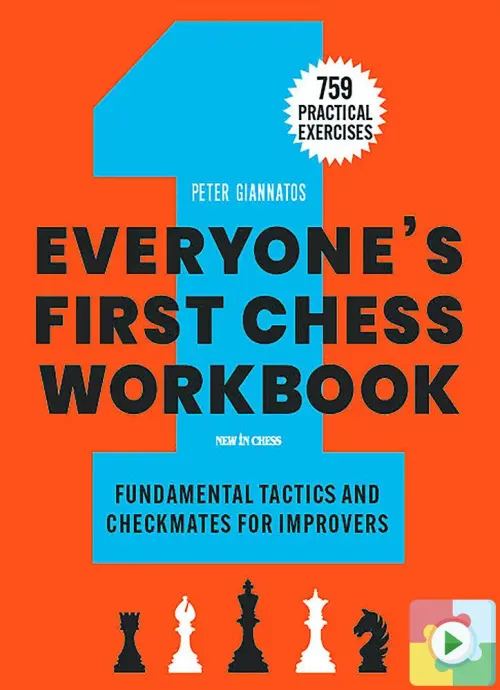
For a first structured course of tactics, Everyone’s First Chess Workbook by Peter Giannatos (New In Chess, 2021) is the place to start — 738 exercises organized as a graded progression rather than a random pile, written by a coach who works with beginners. Reviewing it for British Chess News, John Upham calls it a fine trainer for adult beginners, and notes just as clearly that a player who already solves tactics regularly will find that the bulk of the exercises do not challenge them. That is useful in both directions: it confirms the book’s fit for beginners and tells a club player to look further down this page. It is available on Forward Chess with a free sample.
Which tactics book explains the motifs rather than just drilling them?
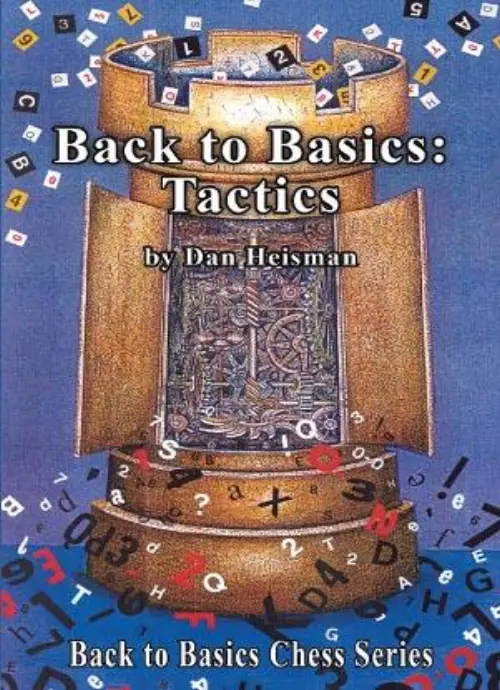
If you want each tactical idea explained before you practice it, Back to Basics: Tactics by Dan Heisman (Russell Enterprises, 2007) is the better first book — Heisman is a long-established instructor, and the book teaches the motifs with around 500 examples and problems used as illustration rather than as the main event. Readers consistently describe it as pitched at beginners through to lower club level and do not report it working for stronger players, so treat it as a companion to a drill book rather than a source of hard practice. It is available on Forward Chess with a free sample.
Is there a complete tactics course for beginners?
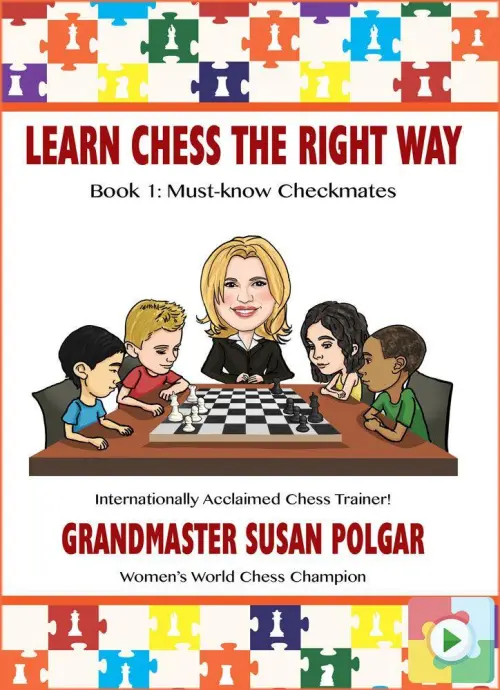
If you would rather work through a program than a single book, Susan Polgar’s Learn Chess the Right Way (Russell Enterprises) runs to five graded volumes, each of 500 puzzles, beginning with basic checkmates and building from there. All five are available separately on Forward Chess, so you can start with the first and continue only if the format suits you. This is the least independently reviewed recommendation on this page — its standing rests on consistently strong reader ratings across the series rather than on published reviews, so weigh it accordingly.
Best chess tactics books for club players
Which tactics book is best for club-level drilling?
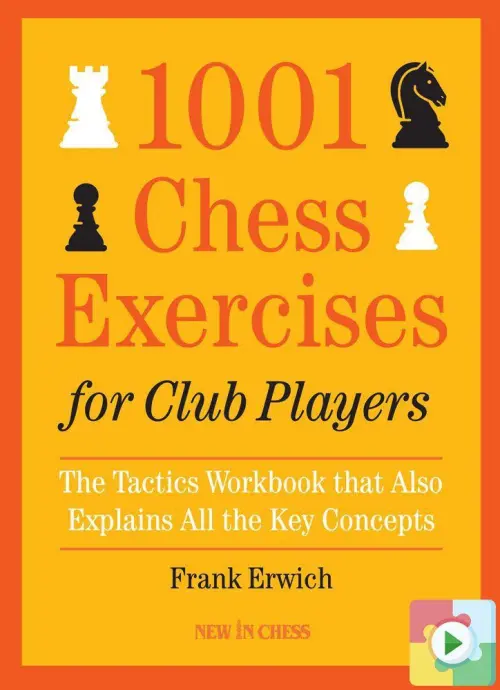
For sustained tactical practice at club strength, 1001 Chess Exercises for Club Players by Frank Erwich (New In Chess, 2019) is the standard choice — a thousand graded exercises pitched by the publisher at 1500–2000. That band is worth trusting more than most: the one independent reader who states a range puts it at 1500–1800, and others who comment describe the exercises as genuinely challenging at club level, so stated and experienced difficulty broadly agree — which is not true of every book in this category. John Upham reviewed it positively for British Chess News, calling it an excellent book that goes highly recommended. It is available on Forward Chess with a free sample.
How do I get better at spotting tactics in my own games?
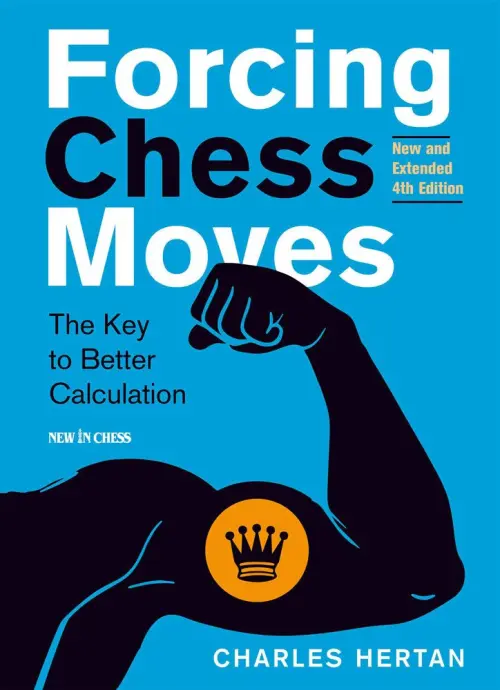
If your problem is not solving puzzles but noticing that a tactic exists, Forcing Chess Moves by Charles Hertan (New In Chess) addresses that directly — its method, which Hertan calls “computer eyes,” is to examine forcing moves first rather than searching for the natural-looking move. Reviewing the New and Extended 4th Edition for British Chess News, Richard James wrote that “everyone loves tactics books full of beautiful, surprising, creative and imaginative moves, and this book is perhaps the best on the market in that respect,” and that anyone from around 1400 upwards will be enchanted and inspired by it, while being candid that the constant repetition of the phrase “computer eyes” may grate on some readers even as others like the style. Make sure you get the 4th edition, which is substantially longer than the original — Forward Chess lists both. It is available there with a free sample.
Get the 4th edition. Forward Chess lists two editions of Forcing Chess Moves. The one to buy is the New and Extended 4th Edition, which is substantially longer than the original; an older, shorter listing also exists and has no free sample. Make sure the page you land on is the 4th edition.
Does the Woodpecker Method work?
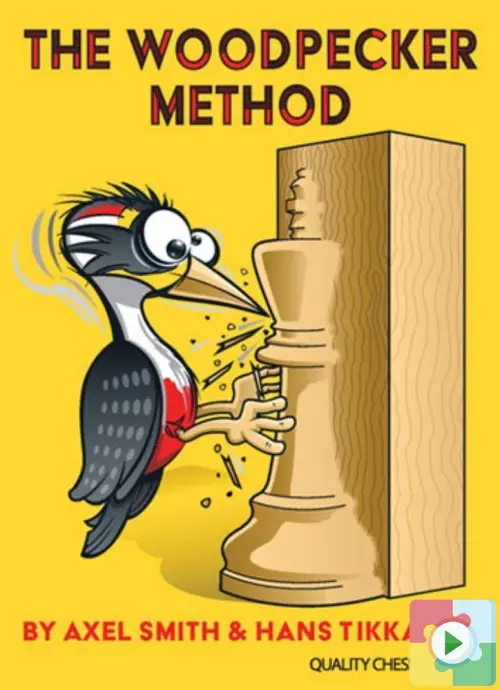
The Woodpecker Method by Axel Smith and Hans Tikkanen (Quality Chess, 2018) is the most-argued-about book on this page, and worth understanding before you buy it. It is a training method rather than a collection: you solve a large set of puzzles, then solve the same set again in progressively faster cycles, on the theory that repetition converts calculation into recognition. Like the Polgar course above, its case rests on user reports rather than published reviews — we could not find a substantial review of it in the chess press — so what follows is what readers say, weighted accordingly.
Those who have worked through it report real gains in pattern recognition and calculation, and several note that the structure itself is what makes them train consistently. The objection is worth as much as the praise. The most heavily invested user in one long discussion reports that after enough cycles you begin memorizing the solutions, which are often specific to their positions, limiting what transfers to real games. Another reader concluded the method mattered more than this particular puzzle set and moved to building their own. One reader who worked through it describes the Easy section as suiting club players and the Intermediate section as genuinely hard, while a self-described 1400 found the book too difficult overall. Treat it as a club-level book with an advanced second half, and go in knowing it drills rather than teaches. It is available on Forward Chess with a free sample.
Best chess tactics books for advanced players
Which tactics book is hardest?
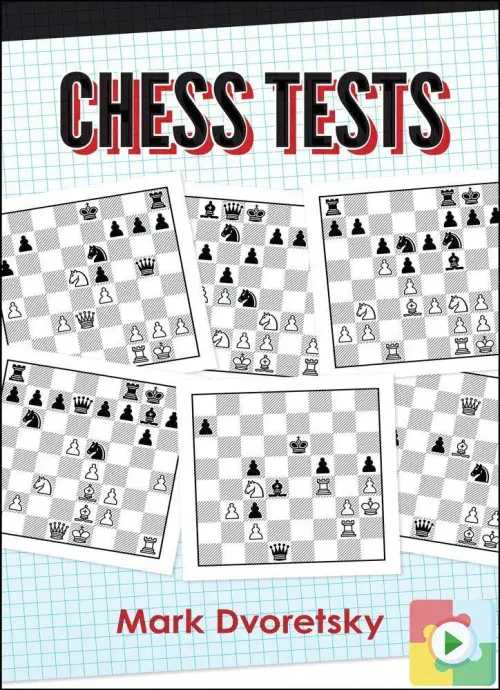
For strong players who want to be tested rather than taught, Chess Tests by Mark Dvoretsky (Russell Enterprises, 2019) is the pick — a workbook of exercises from one of the most respected trainers chess has had, published after his death. John Upham, reviewing it for British Chess News, called it one of the best chess books of 2019 and warned that even the tests labeled as not very difficult are challenging to say the least. It is explicitly not a beginner’s book. It is available on Forward Chess with a free sample.
Which tactics book is best to dip into?
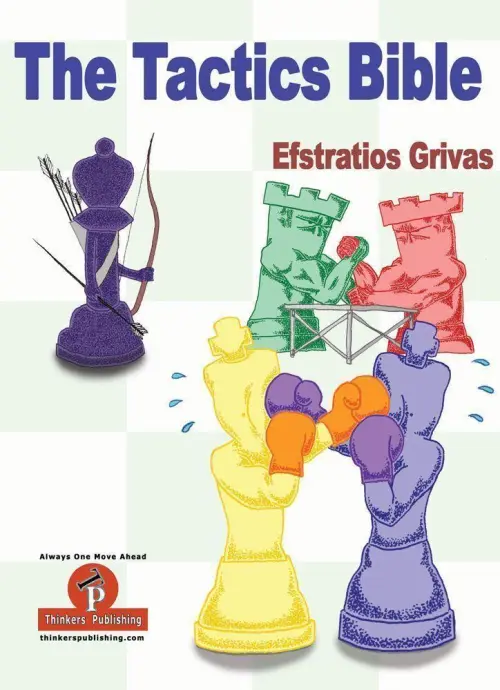
If you want a book to dip into rather than read straight through, The Tactics Bible by Efstratios Grivas (Thinkers Publishing, 2019) is the broadest option here — a large volume whose later parts are given over to mating patterns. FM Richard Webb reviewed it positively for British Chess News at advanced level, warning more experienced readers not to dismiss the earlier material as too basic, and separately praised it as an ideal companion for players developing their recognition of mating patterns. His one reservation is a matter of scope rather than quality: he would have added a short section on the common tactical motifs such as forks, skewers and pins. It is available on Forward Chess with a free sample.
One important book not on this list
No honest guide to tactics books can leave out László Polgár’s Chess: 5334 Problems, Combinations and Games, one of the largest and best-known puzzle collections in print. It is not available on Forward Chess, so we cannot point you to it there — but omitting it entirely would tell you less than you deserve to know. If you want sheer volume of mating problems and combinations in a single book, it remains the reference point that other collections are measured against.
A note on calculation books
Several well-known books are shelved with tactics but are really about something adjacent. Tactics training builds pattern recognition: you learn to see that a fork is available. Calculation training teaches you to work out long forcing sequences accurately once you have spotted the possibility. Hertan’s Forcing Chess Moves sits deliberately on that boundary — its subtitle is The Key to Better Calculation — which is why it appears above. But if your problem is that you already spot tactics and then go wrong in the complications, look for calculation books by name rather than assuming a tactics book will cover the ground.
Frequently asked questions
What is the best chess tactics book overall?
There is no single best one, because these books serve different levels and different training styles. For a beginner, Everyone's First Chess Workbook by Peter Giannatos; for a club player, 1001 Chess Exercises for Club Players by Frank Erwich; for an advanced player, Chess Tests by Mark Dvoretsky.
What is the best tactics book for a complete beginner?
Everyone's First Chess Workbook by Peter Giannatos, which is built as a graded progression rather than an unsorted set of puzzles. If you want the motifs explained first, pair it with Dan Heisman's Back to Basics: Tactics.
Should I get a puzzle book or a book that teaches tactics?
Both, ideally, but in that order of need. If tactical ideas still feel unfamiliar, start with a teaching book such as Heisman's. If you know the motifs and want faster recognition, a drill book such as Erwich's or the Woodpecker Method will do more for you.
Which book is best for learning checkmate patterns?
It depends on your level. If you are starting out, the first volume of Susan Polgar's Learn Chess the Right Way is Must-Know Checkmates — 500 mate puzzles, and available on its own. For a stronger player, Grivas's The Tactics Bible gives mating patterns the most room of the books here, and British Chess News praises it precisely on that point, though it is pitched at advanced players. Polgár's 5334 remains the classic source for sheer volume of mating problems, but it is not on Forward Chess.
Do tactics books still make sense when puzzle apps are free?
They serve different purposes. An app gives you an endless stream of unsorted positions; a book gives you a curated, ordered set with an author's explanations, which is what makes deliberate progression possible. Many strong players use both.
Are these tactics books available as ebooks?
Yes — every one of the eight books listed above is available on Forward Chess, each with a free sample you can read before buying. The one title we name that is not on the platform, Polgár's 5334, is flagged as such where it appears.
Final Recommendations:
For Beginners
- Everyone's First Chess Workbook by Giannatos — a structured, graded introduction to chess tactics. Best suited to beginners, as stronger club players may find it too easy.
- Back to Basics: Tactics by Heisman — an excellent starting point if you want tactical motifs explained before putting them into practice.
- Learn Chess the Right Way by Susan Polgar — a five-volume graded program for players who prefer a step-by-step course to a single book.
For Club Players
- 1001 Chess Exercises for Club Players by Erwich — a demanding collection for sustained tactical training, aimed at players roughly in the 1500–2000 range.
- Forcing Chess Moves by Hertan — trains you to spot forcing moves and tactical opportunities in your own games. Go for the 4th edition.
- The Woodpecker Method by Smith and Tikkanen — a repetition-based training system built around solving the same exercises repeatedly. More drill-focused than explanatory.
For Advanced Players
- Chess Tests by Dvoretsky — the toughest book on this list, designed to test strong players rather than teach beginners.
- The Tactics Bible by Grivas — a broad collection covering a wide range of tactical themes, with later sections focusing heavily on mating patterns.

- Best Books on Chess Sacrifices: 6 Essential Reads - October 11, 2026
- Book Review: My First Chess Opening Repertoire - October 1, 2026
- Best Books to Study the Sicilian: A Complete Guide for White - September 18, 2026