
Choosing the best books on the English Opening starts with understanding the flexibility of 1.c4. White can keep the game in familiar English structures or transpose into queen’s pawn positions, which is exactly why the opening needs a book rather than a summary.
This guide covers seven titles: four for playing the English as White, and three for meeting it as Black. They are grouped by which side of the board you are on, because a repertoire book and a book about facing that repertoire answer different questions.
Last updated September 2026.
Best Books on the English Opening for White

If you want the most recent complete repertoire, Ntirlis’s is the newest book here — with the caveat about its review record noted below. If you want a specific system rather than a full repertoire, the Iron English narrows the choice considerably. Hansen’s book is listed separately below because it is a reference work, not a repertoire — a distinction worth understanding before you buy.
Win with the English!: Playing the English, 2nd Edition — Nikolaos Ntirlis
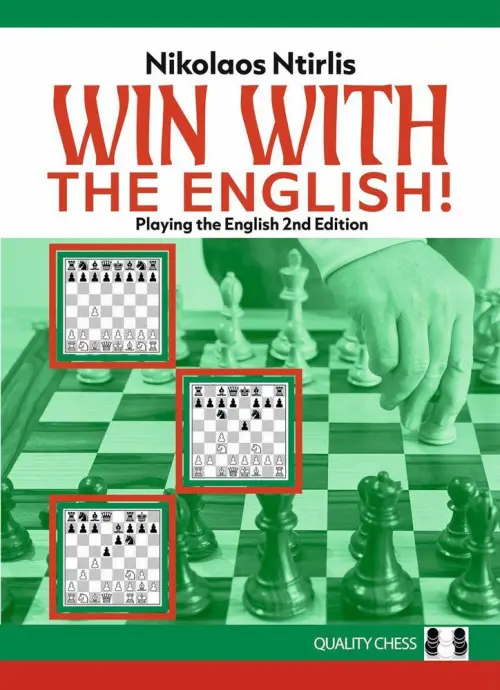
Quality Chess, February 2026, 520 pages. This is the second edition of Playing the English, published in August 2023 at 440 pages, and it supersedes it — the earlier edition is the same repertoire in an earlier form, so there is no reason to own both.
The repertoire covers 1.c4 e5 with Reversed Dragon and Reversed Rossolimo treatments, the Symmetrical after 1.c4 c5 including Hedgehog and double-fianchetto set-ups, and answers to King’s Indian, Grünfeld and Queen’s Indian formations after 1…Nf6. It is also the only 2026 title in this guide.
Review record. It is also new enough that no independent review of this edition could be found, so it is listed here on the basis of what it covers and how current it is, rather than on any published assessment.
Opening Repertoire: The English — David Cummings
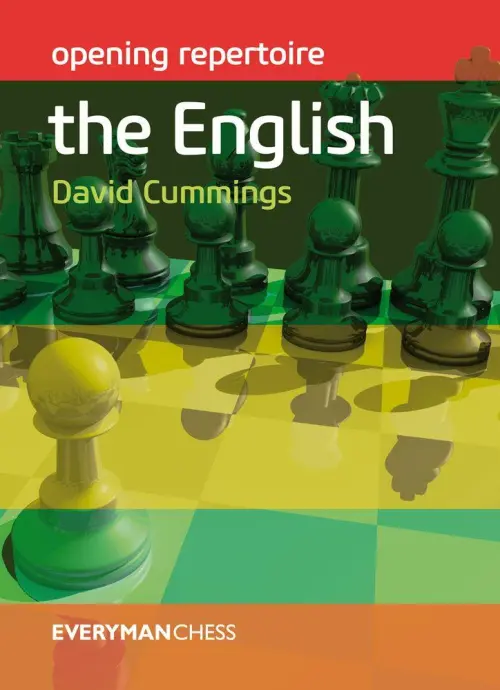
Everyman Chess, February 2017, 400 pages, offering a complete 1.c4 repertoire against King’s Indian-type and Queen’s Gambit Declined-type set-ups and the reversed Sicilian (1.c4 e5).
This is the most discussed English book in the guide by a distance — its dedicated forum thread runs to ninety-three posts and has been read over ninety-six thousand times, with readers working through the analysis and disagreeing with each other about it. That is a better signal than a rating average, and it points to a book people actually play from. One reader puts it at 2000–2400 USCF.
Two things to know. One correspondence player, having read the author’s own reply, maintained that the Symmetrical Tarrasch recommendation is “a short cut” and “not as testing as for instance the QGD Exchange Variation.” And the author has himself noted online that one line has “developed a lot in the two years since the book was written,” recommending a different move than the book gives — useful candor, and a reminder that a 2017 repertoire needs some maintenance.
Opening Repertoire: The Iron English — Simon Williams and Richard Palliser
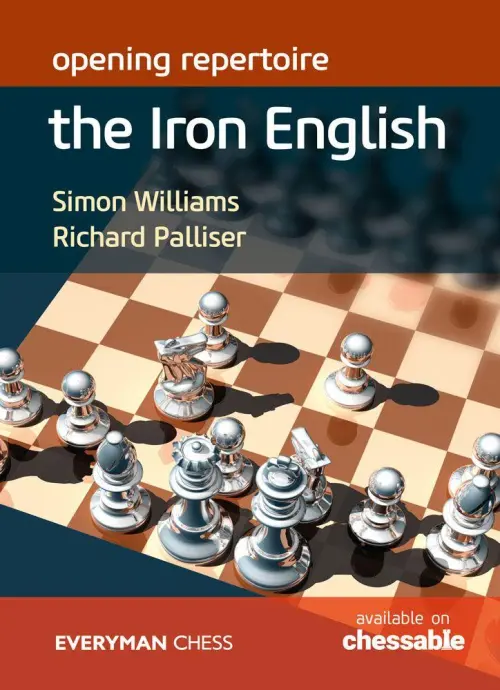
Everyman Chess, 2021, 464 pages, built entirely on the Botvinnik Formation — 2.Nc3, 3.g3, 4.Bg2, 5.e4, 6.Nge2. Reviewing it for British Chess News, John Upham called it “a major piece of work” and “a reliable and friendly companion,” and judged it “probably most suited to someone who already plays the English but not the Botvinnik System.”
Upham is doubtful about it as a starting point: taking up the English for the first time through this book “could well be somewhat daunting and not for the faint hearted.” He also found an improvement on one of the book’s own recommendations in the single line he tested.
Edition note. If you see a 2025 hardcover under the Popular Chess imprint, that is a reissue of this same text rather than a revised edition.
The Full English Opening — Carsten Hansen (a reference, not a repertoire)
Mastering the Fundamentals. New In Chess, 2018, 464 pages.
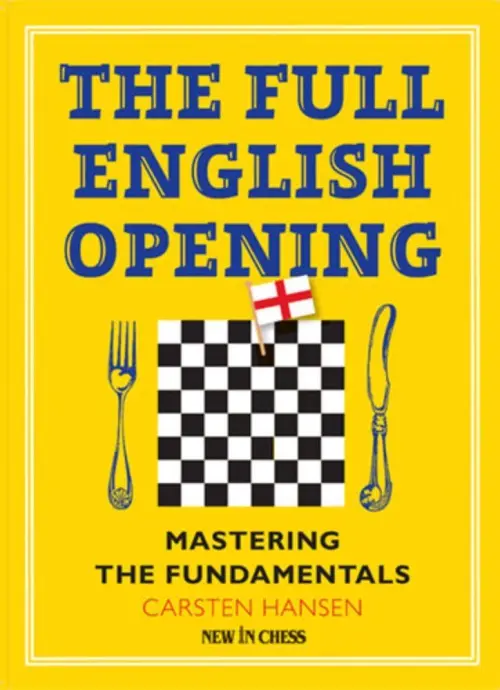
This book is listed apart from the three above because it is not a repertoire and should not be bought as one. Hansen states in his own introduction that he is not providing a predetermined repertoire — a point that sits awkwardly with the back cover’s claim to cover all variations, as reviewer Mark Haast notes. Haast’s verdict is that it is less suitable for building a repertoire, for which better alternatives exist, but that it can be useful as a supplement to a repertoire book. Readers agree it is broad: one describes it as coverage of all English lines rather than a repertoire, and another notes it also serves Black players.
Haast also questions who exactly it is for, and Hansen’s coverage stops at the boundaries of the English proper — outside those lines, as one reader puts it, you are on your own.
Best Books on the English Opening for Black
If you want to meet 1.c4 with 1…e5, start with Delchev and Semkov. If you prefer a Hedgehog structure, there is a dedicated book for that. Palliser’s book is the broadest of the three, covering the English alongside the other openings you will meet from the same players.
Publication dates. Note that all three date from 2007 to 2017: there is no dedicated 2020s book for Black against the English in this guide, which is a gap in the literature rather than an omission here.
Attacking the English/Reti — Alexander Delchev and Semko Semkov
Chess Stars, 2016, covering 1.c4 e5, the Réti after 1.Nf3 d5, and 1.g3 set-ups.
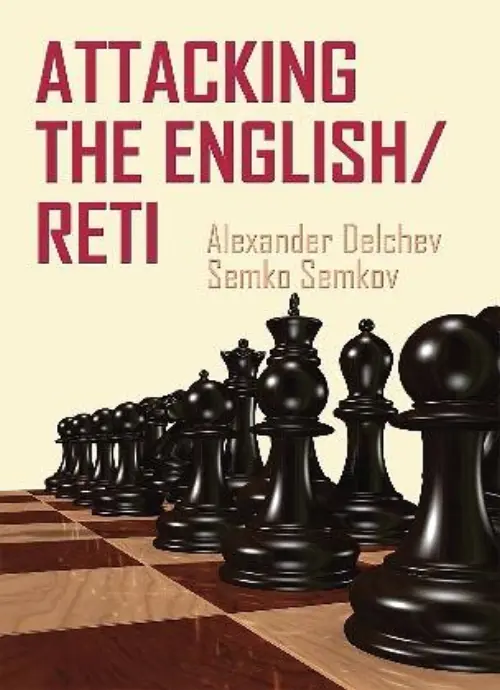
GM David Smerdon reviewed it alongside a competing work and gave both four out of five, describing Delchev and Semkov’s as “an intuitive, dynamic read as well as an attacking quick-fix for the simple theoretician.” He particularly liked the structure — each section opens with the main ideas, then a step-by-step variation guide, then annotated games — which “provides intuition and helps the reader retain the key ideas.”
Smerdon is unusually direct about who it suits, and it is the clearest either/or in this guide: for master-strength players and dedicated theoreticians he recommends the rival book; “for club players and enthusiasts, lazy students, or those pressed for either time or budget, I’d opt for” this one. The tradeoff he names is real — it cannot compete theoretically with a much larger work, and “some theory is inevitably going to fall through the cracks” — but he also could not find “any obvious holes” in the analysis. One structural note: the Réti section allows a transposition to 1.d4 d5, which means some thought for a King’s Indian player.
The Hedgehog vs the English/Reti — Igor Lysyj and Roman Ovetchkin
Chess Stars, 2017, meeting both 1.c4 and 1.Nf3 by building a Hedgehog formation.

This is a structural choice rather than a variation choice, which is what makes it a genuine alternative to the book above rather than a competitor to it. A player reporting first-hand use recommends it without hesitation for anyone wanting a Hedgehog set-up, while noting a specific limit: the repertoire assumes the 1.Nf3 c5 move order, which does not help if you are met with 2.e4, though he reports it also works via 1.Nf3 Nf6.
Review record. No published review of this book was found, so it is included on its coverage and that first-hand account rather than on a critical record.
Beating Unusual Chess Openings — Richard Palliser
Everyman Chess, February 2007, 224 pages, covering the English, the Réti and King’s Indian Attack set-ups together.
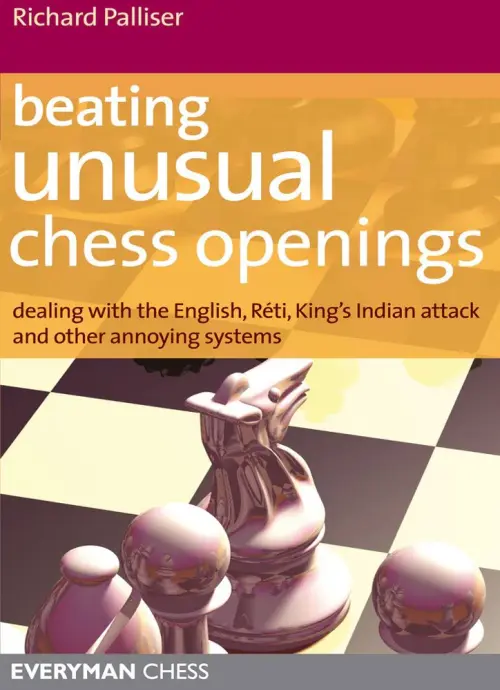
Reviewing it on release, Sean Marsh singled out the English section, which he called “worth the cover price alone.” Its value now is breadth: it answers the whole family of non-1.e4, non-1.d4 openings in one volume, which suits a player who does not want three books for three rare systems.
Its age is the caveat, and a sourced one. A 2020 assessment holds that for the symmetrical English with 1…c5 the book “should still be good enough almost everywhere,” but that a reader “would need to update for recent discoveries in the sharpest lines.” Treat it as a solid framework that expects some maintenance, not as current theory.
Comparison
| Book | Side | Coverage | Year | Pages |
|---|---|---|---|---|
| Ntirlis, Win with the English! | White | Full 1.c4 repertoire | 2026 | 520 |
| Cummings, Opening Repertoire: The English | White | Full 1.c4 repertoire | 2017 | 400 |
| Williams & Palliser, The Iron English | White | Botvinnik Formation | 2021 | 464 |
| Hansen, The Full English Opening | White (also useful to Black) | Reference, all main lines | 2018 | 464 |
| Delchev & Semkov, Attacking the English/Reti | Black | 1…e5, Réti, 1.g3 | 2016 | — |
| Lysyj & Ovetchkin, The Hedgehog vs the English/Reti | Black | Hedgehog structures | 2017 | — |
| Palliser, Beating Unusual Chess Openings | Black | English, Réti, KIA | 2007 | 224 |
More opening guides
Frequently asked questions
What is the best book on the English Opening?
For a current, complete White repertoire, Ntirlis’s Win with the English! is the newest and supersedes his own 2023 edition — though it is new enough that no independent review of it could be found. For a book with a long published track record and an active readership, Cummings’s Opening Repertoire: The English has the deepest discussion record of any title here.
What is the difference between the English and the Réti?
They are different first moves — 1.c4 and 1.Nf3 — that frequently transpose, which is why all three of the Black books in this guide cover both in a single volume.
I want to play the English but not memorize much. What should I read?
The Iron English commits to one formation, the Botvinnik set-up, throughout, which narrows what you need to know. Be aware that its reviewer suggests taking up the English through this book "could well be somewhat daunting and not for the faint hearted", despite that focus.
Which book should I buy to face 1.c4 as Black?
If you want 1…e5, Delchev and Semkov. If you want a Hedgehog structure, Lysyj and Ovetchkin. If you want one book that also answers the Réti and King’s Indian Attack, Palliser — with the caveat that it dates from 2007.
Is Carsten Hansen’s book a repertoire?
No, and this matters if you are choosing one book. The author says in his introduction that he does not provide a predetermined repertoire; it is a survey of the opening’s main lines and is best used alongside a repertoire book rather than instead of one.
Are there good older English books?
There are well-regarded ones, but this guide restricts itself to books still current enough to build a repertoire on today, which rules out several titles from the 1990s that readers still recommend.
Playing the English as White
- Win with the English! by Ntirlis — the newest complete repertoire here, superseding his own 2023 edition. New enough that no independent review of it could be found.
- Opening Repertoire: The English by Cummings — a complete 1.c4 repertoire with the deepest discussion record of any title here. A 2017 repertoire needs some maintenance.
- Opening Repertoire: The Iron English by Williams and Palliser — built entirely on the Botvinnik Formation; probably most suited to someone who already plays the English but not the Botvinnik System.
Facing the English as Black
- Attacking the English/Reti by Delchev and Semkov — if you want 1…e5. GM David Smerdon’s pick for club players and enthusiasts.
- The Hedgehog vs the English/Reti by Lysyj and Ovetchkin — if you want a Hedgehog structure. No published review was found; included on its coverage and a first-hand account.
- Beating Unusual Chess Openings by Palliser — one book that also answers the Réti and King’s Indian Attack, with the caveat that it dates from 2007.
A reference, not a repertoire
- The Full English Opening by Hansen — a survey of the opening’s main lines, best used alongside a repertoire book rather than instead of one.

- Best Books on the English Opening: A Complete Guide - October 15, 2026
- Best Books on Chess Sacrifices: 6 Essential Reads - October 11, 2026
- Book Review: My First Chess Opening Repertoire - October 1, 2026