
Last updated: September 2026
Calculation is a different skill from tactics, and it needs different books: tactics training teaches you to see that a combination exists, while calculation training teaches you to work out long forcing sequences accurately once you have seen the possibility.
For most club players the best starting point is R.B. Ramesh's Improve Your Chess Calculation, winner of the Chess.com Book of the Year award for 2022, with Andrew Soltis's The Inner Game of Chess the more readable alternative and Romain Edouard's Chess Calculation Training series the choice if you want pure graded exercises. Stronger players should look at Jacob Aagaard's Grandmaster Preparation: Calculation. Every book in the list below is available on Forward Chess.
Best chess calculation books at a glance
| Book | Author | Publisher | Year | Level | Best For |
|---|---|---|---|---|---|
| Improve Your Chess Calculation | R.B. Ramesh | New in Chess | 2022 | Club | A graded, award-winning course in method |
| The Inner Game of Chess | Andrew Soltis | Mongoose Press | 2014 (rev.) | Club | A more approachable route in |
| Improve Your Chess Now | Jonathan Tisdall | New in Chess | 2023 (New Ed.) | Club | Visualization and “stepping-stone” thinking |
| Chess Calculation Training (series) | Romain Edouard | Thinkers Publishing | 2017– | Club | Graded exercise sets |
| Invisible Chess Moves | Emmanuel Neiman & Yochanan Afek | New in Chess | 2011 | Club | The moves you systematically fail to see |
| Grandmaster Preparation: Calculation | Jacob Aagaard | Quality Chess | — | Advanced | A named-technique method for strong players |
| Universal Chess Training | Wojciech Moranda | Thinkers Publishing | 2020 | Advanced | Demanding modern training material |
| Move First, Think Later | Willy Hendriks | New in Chess | 2012 | Advanced | The case against how you were taught to think |
Is there a calculation book for beginners?
Very nearly not, and it is worth saying so plainly: calculation books start at club level. The lowest level claimed for any book here is around 1200 — the floor Richard James traces in Ramesh’s five-tier structure — and that same book runs all the way to 2800, so it is a course you grow into rather than a first book. The one genuine exception is the entry-level volume of Romain Edouard’s series, Chess Calculation Training for Kids and Club Players, which British Chess News recommends for improving juniors.
The reason for the gap is not snobbery. Calculation depends on pattern recognition you have already built: you cannot usefully search for a combination until you know what combinations look like.
If you are below club strength, tactics training will do more for you than any book on this page. See our guide to the best chess tactics books, and come back to this list when you can already spot forks, pins and deflections reliably.
Best chess calculation books for club players
Which calculation book should most players start with?

For a structured course in how to calculate, Improve Your Chess Calculation by R.B. Ramesh (New In Chess, 2022) is the best-credentialed starting point — it won the Chess.com Book of the Year award for 2022, and it is built as a graded progression rather than an undifferentiated pile of positions. Reviewing it for British Chess News, Richard James describes a five-tier structure spanning roughly 1200 to 2800, so the book grows with you. James identifies Ramesh’s core method as “Kotov’s Candidate Moves idea” — a lineage worth knowing about, and one this page returns to below. It is available on Forward Chess with a free sample.
Which calculation book is the easiest to read?
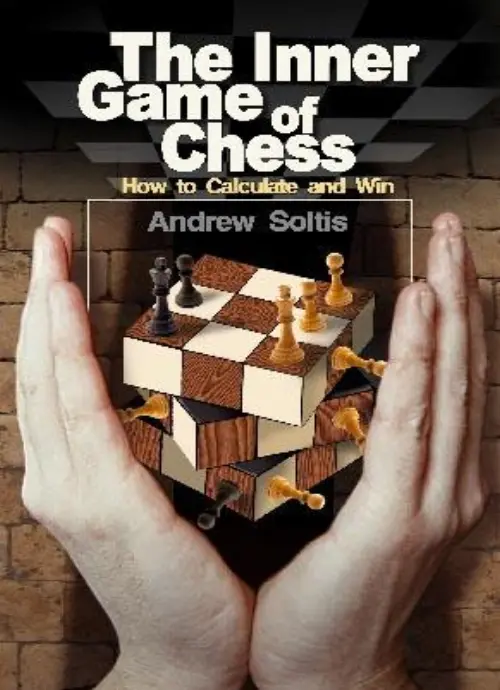
If Ramesh looks daunting, The Inner Game of Chess by Andrew Soltis is the more approachable route — Soltis writes narrative prose rather than exercise sets, and the subtitle, How to Calculate and Win, is an accurate description of the scope. Reviewing it for ChessCafe, Michael McGuerty called it “deservedly considered a classic” and judged it more accessible than Aagaard’s Grandmaster Preparation: Calculation, which is a useful calibration: these two books sit at opposite ends of this page for a reason. It is available on Forward Chess with a free sample.
Which book helps most with visualization?
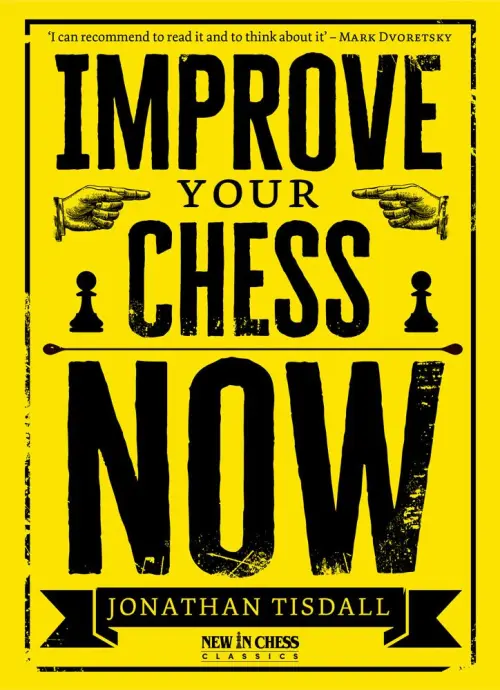
If your problem is losing the position in your head three moves deep, Improve Your Chess Now by Jonathan Tisdall (New In Chess) is the book on visualization — it is best known for its treatment of “stepping-stone” thinking, a technique for holding a long variation together by anchoring it to intermediate positions. It has an unusually good review record across two editions: John Watson reviewed the 1997 original, and GM Matthew Sadler reviewed the 2023 New Edition that Forward Chess now sells. The publisher describes that edition as “reprinted with a modern design and a new foreword by the author,” and says the content is still relevant more than twenty-five years on — so the older assessments still speak to what you would be buying. It is available on Forward Chess with a free sample.
Which calculation book is pure exercises?
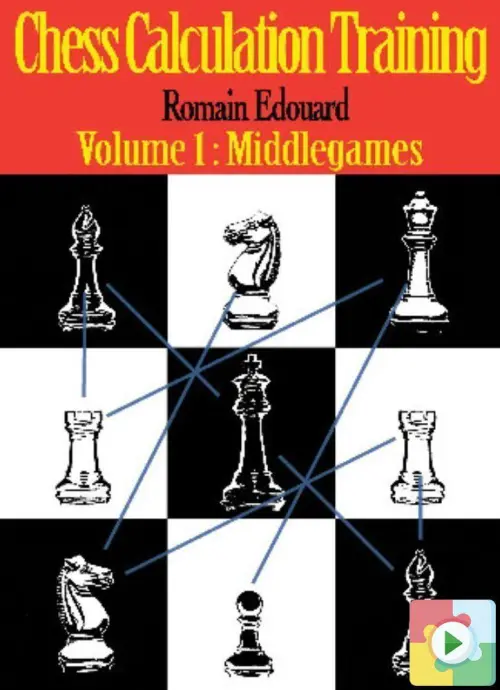
If you want to train rather than read, Romain Edouard’s Chess Calculation Training (Thinkers Publishing) is a graded exercise series — the drill pole of this topic, where the positions rather than the prose do the teaching. The volumes are sold separately on Forward Chess, so you can take the middlegame volume first and continue only if the format suits you. Reviewing for British Chess News, Tony Williams covered the Legendary Games volume, and John Upham reviewed the entry-level volume — titled Chess Calculation Training for Kids and Club Players — which he recommends for improving juniors and club players, and which is the one genuinely approachable book on this page. There is also a separate endgames volume, which belongs with endgame study rather than here. It is available on Forward Chess with free samples.
Which book covers the moves you never even consider?
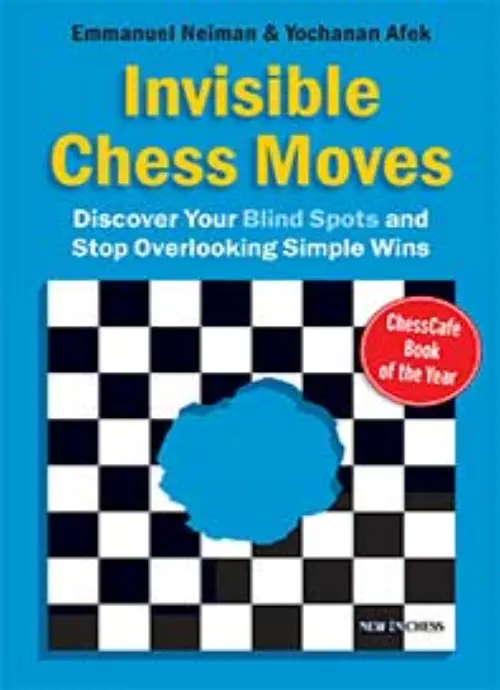
For the specific problem of blind spots, Invisible Chess Moves by Emmanuel Neiman and Yochanan Afek (New In Chess, 2011) is the only book here devoted to them — it is about the moves that do not occur to you at all, rather than the moves you calculate and reject. Its publisher records a ChessCafe Book of the Year award for 2011, and Steve Goldberg reviewed it positively for that outlet. Nothing else on this page addresses that particular failure. It is available on Forward Chess with a free sample.
Best chess calculation books for advanced players
Which calculation book is the standard for strong players?
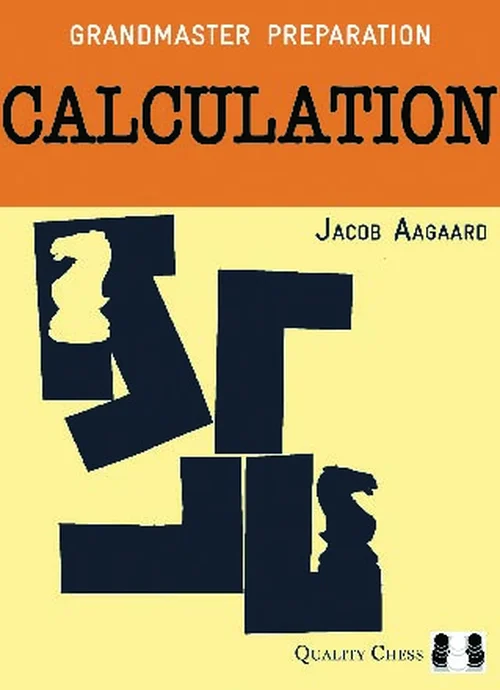
For players already past club level, Grandmaster Preparation: Calculation by Jacob Aagaard (Quality Chess) is the standard method book — it teaches calculation through named techniques such as candidate moves, comparison and elimination, each with demanding exercises. Quality Chess states it won the Association of Chess Professionals’ Book of the Year award for 2013. Be honest with yourself about the level: reviewing a different book, ChessCafe’s Michael McGuerty noted this one is less accessible “to the average player,” which is exactly why Soltis appears above and this does not. It is available on Forward Chess with a free sample.
Which is the most demanding training book here?
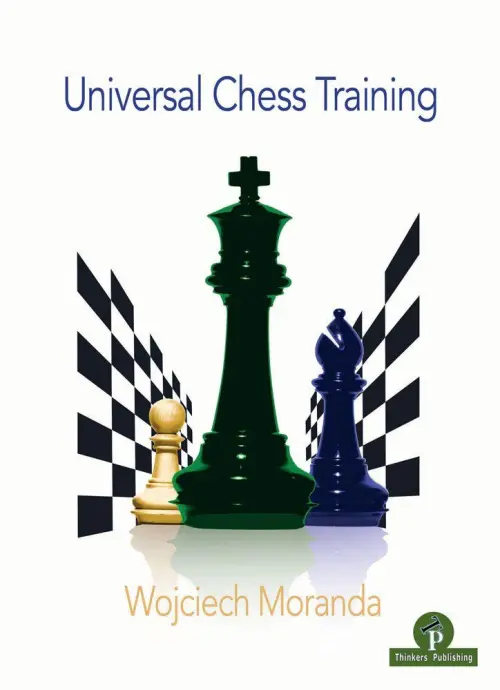
Universal Chess Training by Wojciech Moranda (Thinkers Publishing, 2020) is demanding material whose intended level is genuinely disputed. The publisher pitches it at “players rated between 1600 and 2500.” Richard James, reviewing it for British Chess News, is positive about the book for strong players but doubts that floor: he calls the claim that it suits anyone 1600+ “a trifle optimistic,” and found its second and third chapters “much too deep.” We have slotted it as advanced on the reviewer’s judgment rather than the publisher’s, but you should know both figures before buying. It is available on Forward Chess with a free sample.
The argument at the heart of calculation training
Most calculation books teach a version of the same method: identify your candidate moves, then work through them systematically, building an analysis tree without going back over ground you have covered. That framework comes from Alexander Kotov’s Think Like a Grandmaster, which appeared in English in 1971 and has shaped how calculation has been taught ever since — Richard James identifies Ramesh’s method, recommended above, as “Kotov’s Candidate Moves idea.”
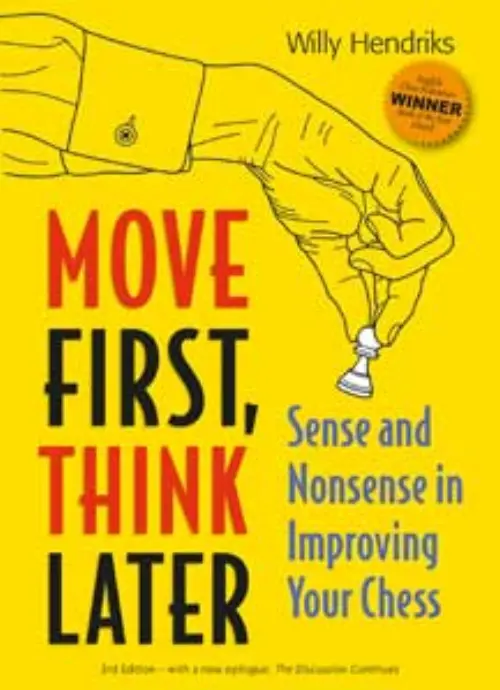
Willy Hendriks’s Move First, Think Later (New In Chess, 2012) argues that this is not how strong players actually think — that moves suggest themselves before any systematic search begins, and that much standard training advice describes a tidy process nobody follows. Writing in British Chess News about a later Hendriks book, Richard James looks back on this one and reports that it “proved controversial” and that “there were others who considered it highly dangerous.” It is worth being precise about that: James is describing how others reacted, and he places his own view “somewhere in the middle” while calling the book’s positions “extremist views on how chess should be taught.” We could not find a reviewer who argues at length, under their own name, that Hendriks is simply wrong — but that is not the same as unanimity, and Reddit and Amazon were unreachable when we looked. Jeremy Silman recommended it for stronger players while cautioning that “What’s true for titled players isn’t true for the chess masses!” — a judgment about who it suits rather than a rejection of the argument.
You do not need to resolve this to buy a book. But it explains why the recommendations here differ so much in shape, and it is why Kotov is named below despite not being on the platform: you cannot follow Hendriks’s argument without knowing what he is arguing against.
Two books not on Forward Chess
Two of the calculation books worth knowing about are not available on the platform, and pretending otherwise would leave this guide less useful than it should be.
Alexander Kotov’s Think Like a Grandmaster is the origin of the candidate-moves method described above. Its central advice is exactly what Hendriks disputes, but it is the book the entire conversation refers back to.
Sam Shankland’s Grandmaster Training Camp 1: Calculation! (Quality Chess, 2023) is the significant recent addition to this shelf. The title is currently not available on Forward Chess.
Frequently asked questions
Which chess calculation book should I buy?
It depends on your strength, and these books do not compete for one top spot. For most club players, Improve Your Chess Calculation by R.B. Ramesh — it won the Chess.com Book of the Year award for 2022 and is built as a graded course. If you want something more readable, Andrew Soltis's The Inner Game of Chess. Strong players are better served by Jacob Aagaard's Grandmaster Preparation: Calculation.
What is the difference between tactics books and calculation books?
Tactics training builds pattern recognition — learning to see that a fork or a deflection is available. Calculation training teaches you to work out long forcing sequences accurately once you have spotted the possibility. If you miss tactics entirely, start with tactics; if you see them and then go wrong in the complications, calculation is what you need.
Can a beginner use these books?
Mostly not — these books assume you already recognize tactical patterns reliably, and the reviewers say so. The one exception is the entry-level volume of Edouard's series, Chess Calculation Training for Kids and Club Players, which British Chess News recommends for improving juniors. Otherwise, build pattern recognition first with a tactics book and then return.
Do I need to read Kotov first?
No. Think Like a Grandmaster is the historical source of the candidate-moves method, but the modern books teach it directly, and it is not on Forward Chess. Read it if you want the origin of the argument, not as a first step.
Are these calculation books available as ebooks?
Yes — every one of the eight books listed above is available on Forward Chess with a free sample you can read before buying. The two titles named as unavailable, Kotov's and Shankland's, are flagged as such where they appear.
Final Recommendations
For club players
- Improve Your Chess Calculation by Ramesh — a structured course with progressively harder exercises. A strong starting point and the winner of Chess.com’s 2022 Book of the Year award.
- The Inner Game of Chess by Soltis — a more approachable introduction, with an emphasis on explanation. A good alternative if Ramesh’s book feels daunting.
- Improve Your Chess Now by Tisdall — a good choice if you struggle to visualize positions during calculation. Its “stepping-stone” technique helps you keep track of long variations. The link leads to the 2023 New Edition.
- Chess Calculation Training by Edouard — a series of graded exercises for readers who want practice. Start with the Middlegames volume.
- Invisible Chess Moves by Neiman & Afek — explores the blind spots that cause you to overlook moves you never even consider.
For advanced players
- Grandmaster Preparation: Calculation by Aagaard — a demanding course for stronger players, with exercises organized around techniques such as candidate moves, comparison, and elimination.
- Universal Chess Training by Moranda — challenging training material best suited to stronger players. The publisher recommends it for ratings of 1600–2500, though reviewer Richard James questions whether the lower end is realistic.
- Move First, Think Later by Hendriks — challenges conventional calculation advice and asks how strong players actually think. Best read as a fresh perspective once you have some grounding in calculation.
For beginners — start with tactics
Most of these books assume you already recognize common tactical patterns. If you are still learning to spot forks, pins, and other basic tactics, start with our guide to the best chess tactics books. For an accessible introduction to calculation, consider the entry-level volume of Edouard’s Chess Calculation Training for Kids and Club Players, which British Chess News recommends for improving juniors.

- Best Chess Calculation Books: Complete Guide - September 8, 2026
- Best Caro-Kann Defense Chess Books: Complete Opening Guide - July 12, 2026
- Book Review: Attack and Counterattack in Chess - June 23, 2026
 Forward Chess