
Last updated: June 2026
The Najdorf Variation of the Sicilian Defense is a popular choice for Black players against 1.e4. It offers an ambitious counter-attacking game with plenty of scope for innovative play and sharp middlegame positions.
The opening is named after Miguel Najdorf, the Polish-Argentinian grandmaster who pioneered it in the mid-20th century. It was later popularized by legendary world champions like Bobby Fischer and Garry Kasparov.
In this detailed guide, we’ll review the best books on the Najdorf defense.
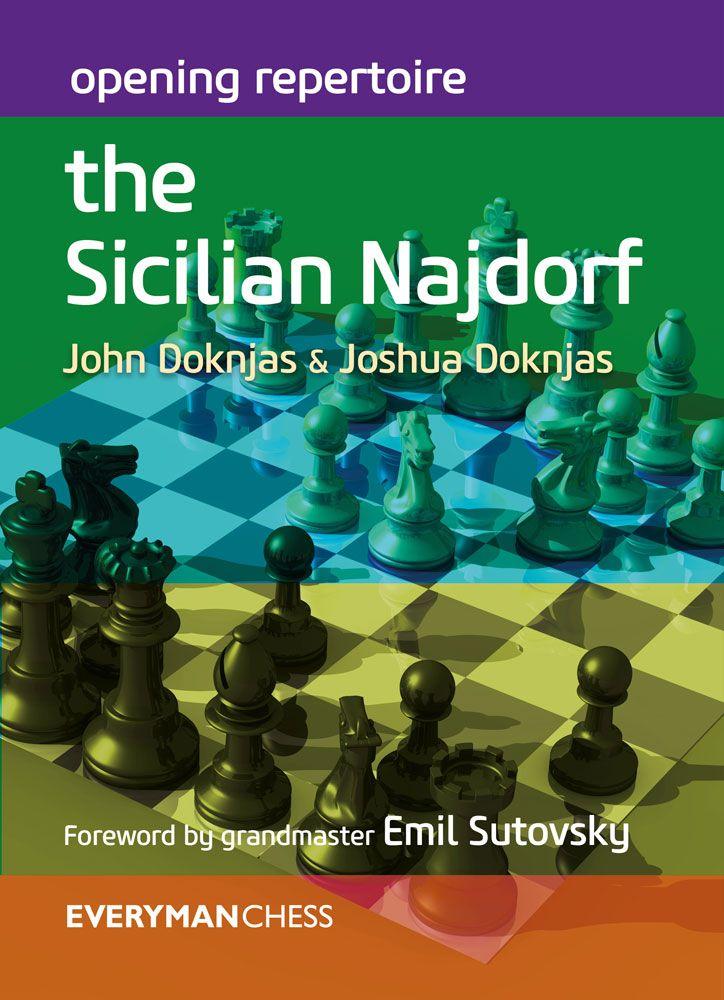
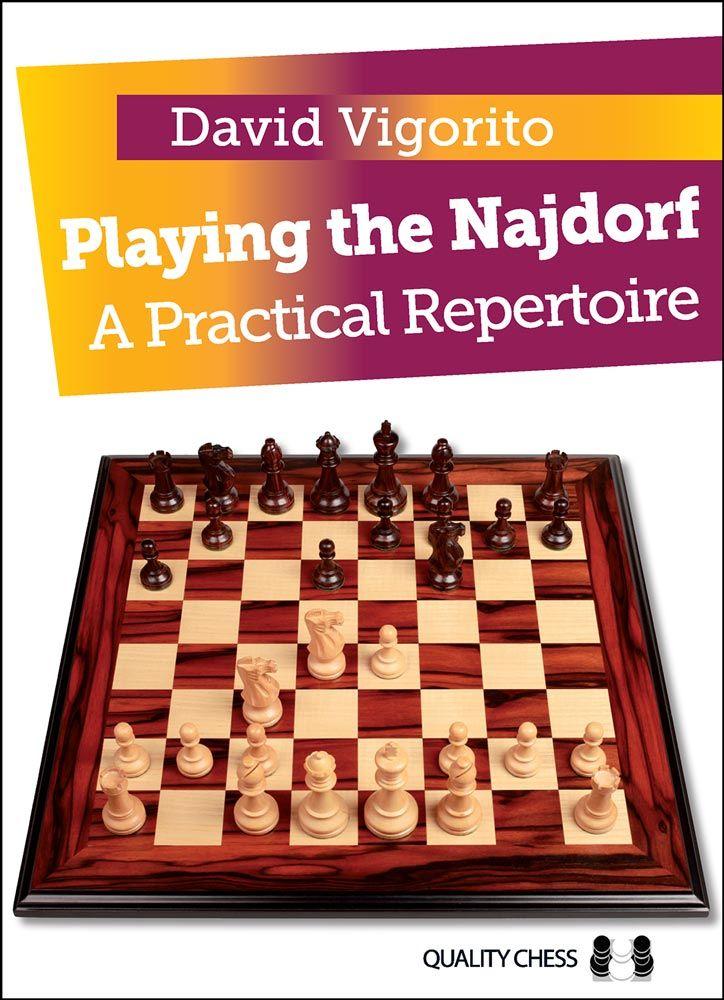
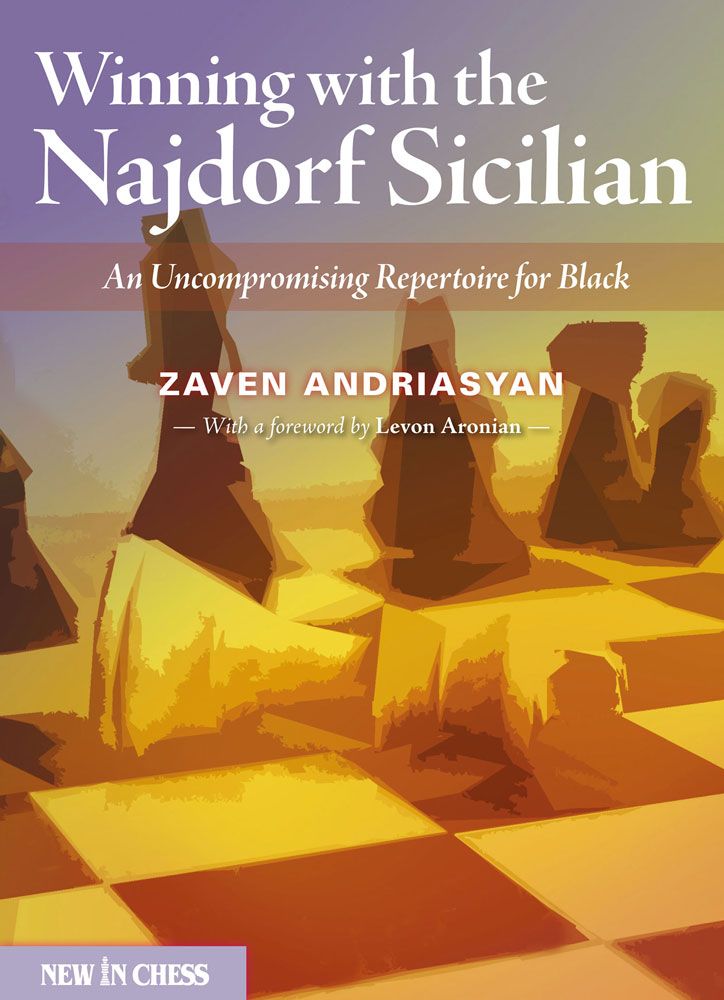
All three are available on Forward Chess with free interactive sample chapters — try before you buy.
The Main Najdorf Books: Complete Comparison
| Book | Author | Publisher | Scope | Best For |
|---|---|---|---|---|
| Opening Repertoire: The Sicilian Najdorf | John & Joshua Doknjas | Everyman Chess | Complete Black repertoire | 1400–2000 |
| Playing the Najdorf | David Vigorito | Quality Chess | Deep theoretical coverage | 1700–2400 |
| Winning with the Najdorf Sicilian | Zaven Andriasyan | New In Chess | Practical club repertoire | 1400–1900 |
| The Najdorf in Black and White | GM Bryan Smith | Mongoose Press | Game collection (both colors) | 1400–2200 |
| The Najdorf Bg5 Revisited (Vol. 1) | Lukasz Jarmula | Thinkers Publishing | Main Line (6.Bg5) | 1600–2200 |
| The Najdorf Bg5 Revisited (Vol. 2) | Lukasz Jarmula | Thinkers Publishing | Main Line (6.Bg5) | 1700–2400 |
Note: Rating ranges are editorial estimates based on each book’s target audience and content level; they are not publisher designations.
What Is the Starting Position of the Sicilian Najdorf?
Najdorf after 5…a6:
The Sicilian Najdorf arises after 1.e4 c5 2.Nf3 d6 3.d4 cxd4 4.Nxd4 Nf6 5.Nc3 a6. The move 5…a6 — the Najdorf move — prevents Nb5, supports a future …b5, and keeps Black’s options maximally flexible.
Why Is the Najdorf the Most Studied Opening in Chess?
The Najdorf has a long and rich history among openings. It offers black a fighting chance to play for a win against 1. e4, leading to dynamic, counter-attacking positions, and a good scope for innovations.
Fischer played it. Kasparov built his career on it. Today, elite players continue to test and refine it in preparation battles that can run to move 30 or beyond.
For the serious club player, this theoretical density can be both an asset and a challenge. Getting the most out of the Najdorf requires understanding not just the moves but the strategic and tactical logic behind them.
Which Najdorf Book Is Best for Club Players Looking for a Complete Black Repertoire?
Opening Repertoire: The Sicilian Najdorf by John and Joshua Doknjas is the most practical starting point for a club player who wants a complete, ready-to-use Black repertoire.
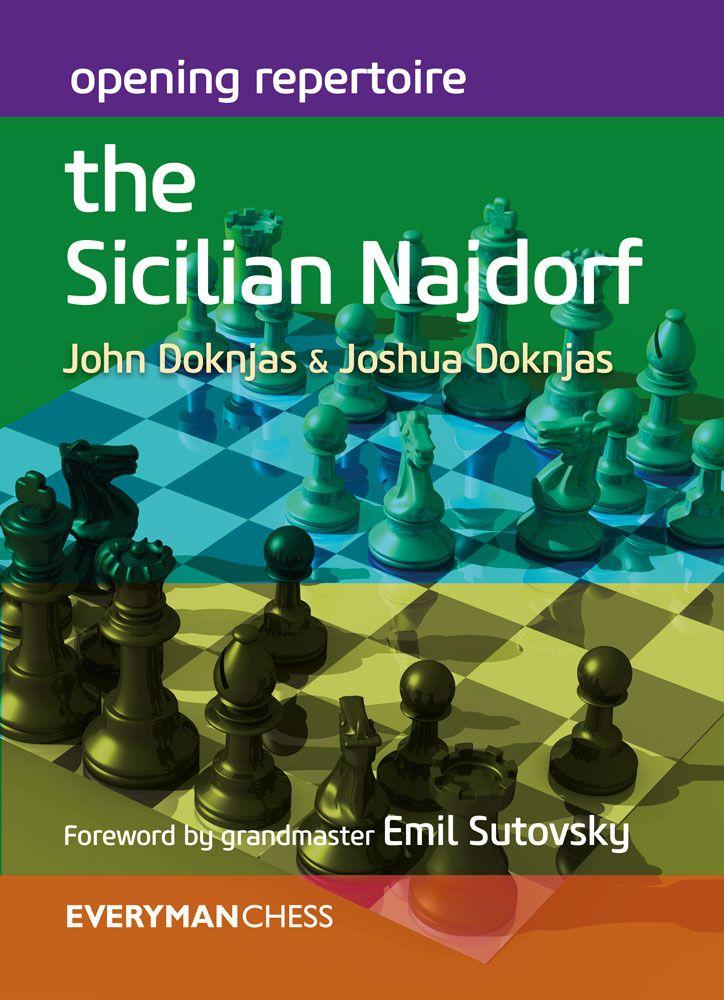
The Everyman Opening Repertoire series offers readers a complete, ready-to-play repertoire rather than a survey of possible options. The Doknjas book delivers exactly that, built around 42 deeply annotated model games that cover all the major White systems.
- The repertoire is complete. The book covers all major White systems: the English Attack, the Main Line (6.Bg5), the Adams Attack (6.h3), and sidelines. A player who works through the book emerges with preparation for everything they are likely to face.
- The explanations are accessible. The book does not assume 20 moves of prior memorization — it builds from the structural ideas outward.
The English Attack (6.Be3 with f3, Qd2, and 9.g4) is one of the most critical junctions in modern Najdorf theory. The Doknjas book provides a concrete, principled repertoire response for Black here — one of the lines most club players will need to know first.
Which Najdorf Book Offers the Deepest Theoretical Coverage?
David Vigorito’s Playing the Najdorf (Quality Chess) is also a complete Black repertoire, but pitched at a significantly deeper analytical level than the Doknjas book. Where Doknjas targets club players (1400–2000) with a complete, accessible repertoire, Vigorito delivers the depth and rigor that serious tournament players demand — detailed analysis of variations and deeper exploration of the resulting positions.
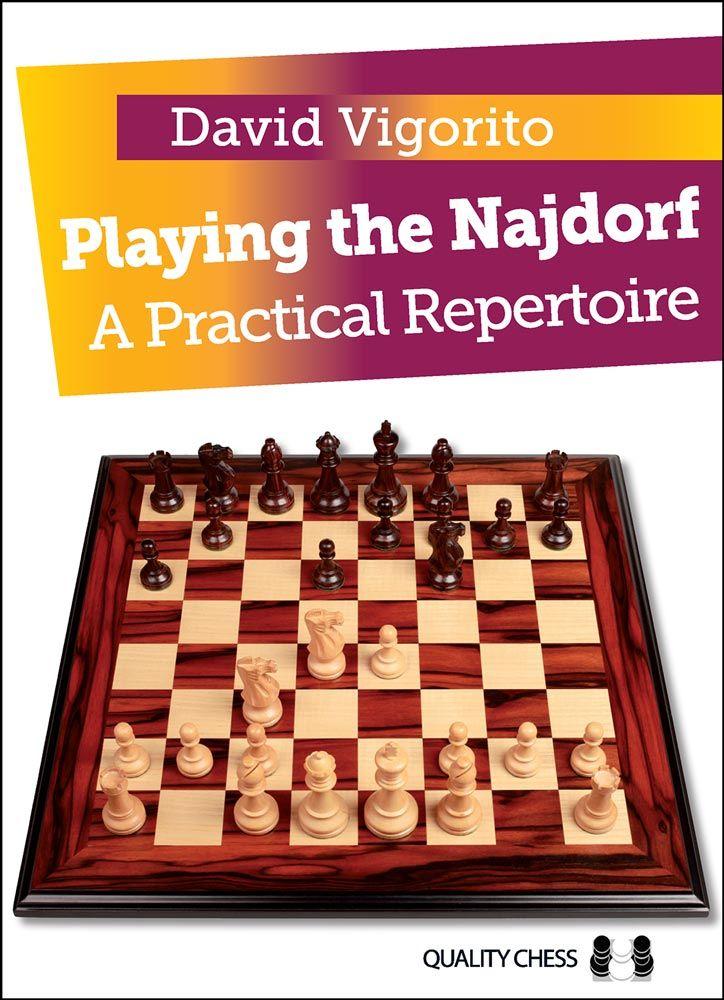
Quality Chess is known for its exacting analytical standards, and this book reflects that. The variations are worked out to a depth that rewards repeated study and assumes stronger analytical skills and theoretical background.
This is the book for players above 1700 who are comfortable with deeper analysis and want to extend their preparation beyond what club-level preparation typically covers. It is an excellent second Najdorf resource for players moving from the Doknjas foundation into more demanding territory.
What Are the Caveats on Winning with the Najdorf Sicilian by Andriasyan?
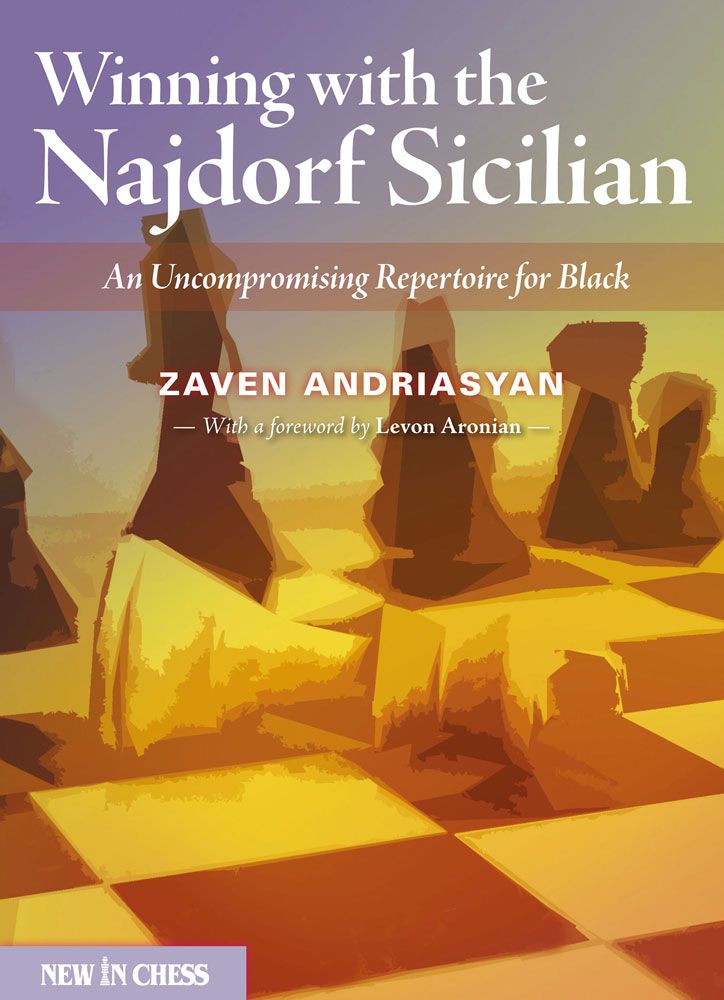
Winning with the Najdorf Sicilian by Zaven Andriasyan (New In Chess, 2013) provides a practical club-level attacking repertoire for Black. Andriasyan sidesteps the most theoretically demanding White systems — including the English Attack — in favor of sharper, less explored territory.
For players in the 1400–1900 range who want an ambitious repertoire without committing to deep English Attack theory, this is a reasonable approach.
The limitation is twofold: first, avoiding the English Attack is only viable if you are prepared for White to insist on it anyway. Players who primarily face 1600–2000 rated opponents will encounter the English Attack regularly. Second, the 2013 publication date means specific line evaluations — especially in the English Attack — have shifted as elite-level novelties accumulated over the past decade. A book that sidesteps those lines will have gaps precisely where modern theory has moved on. If this is your primary repertoire, you will eventually need to check recent games and novelties in the lines you rely on.
Andriasyan’s book works well as a complement once your primary repertoire is in place, adding coverage of sharp lines and alternative approaches. For players using Doknjas as their main repertoire, or Smith’s game collection for positional understanding, this is a worthwhile secondary resource.
What About The Najdorf in Black and White by GM Bryan Smith?
The Najdorf in Black and White by GM Bryan Smith takes a fundamentally different pedagogical approach: rather than theoretical lines or variation trees, it presents 29 carefully selected games grouped by White’s main variations. Smith’s stated goal is not to be exhaustive but to show how to play the Najdorf through archetypal positions — games chosen for both their instructional value and their aesthetic quality, reflecting how strong players actually navigate the opening at the board.

Smith is explicitly honest about the opening’s drawbacks and problems, not just its strengths. This approach is ideal for players who build confidence and understanding through studying model games rather than memorizing theoretical lines. It offers a complete view of White’s main systems (6.Bg5, 6.Be3, 6.Be2, 6.Bc4, 6.h3, and others) while keeping the focus on practical understanding.
Which Najdorf Variations Should Club Players Prioritize Learning?
The Najdorf has dozens of significant variations. Club players below 1900 rarely need to cover all of them in depth. A practical prioritization:
Tier 1 — Must know in depth:
- English Attack (6.Be3 with f3, Qd2, g4) — the most common aggressive system at club level
- Main Line (6.Bg5) — still encountered regularly, with deep theoretical traditions
Tier 2 — Know the key ideas:
- Adams Attack (6.h3) — limits Black’s …Bg4 options; less forcing but solid
- 6.f4 — the old main line; less common but still played
- 6.Bc4 (Fischer-Sozin) — a genuinely dangerous attacking system requiring concrete knowledge
- 6.a4 — prophylactic system; not especially forcing, but must understand Black’s queenside counterplay
Tier 3 — Familiarity sufficient:
- 6.g3, 6.Rg1, sideline move orders — understanding Najdorf structure is usually enough to navigate these
Opening Repertoire: The Sicilian Najdorf by John and Joshua Doknjas covers Tiers 1 and 2 in a way that a club player can use directly at the board.
What About Books on Playing Against the Najdorf as White?
White players who face the Najdorf regularly also need specific preparation. The Forward Chess catalog includes several dedicated White-side resources:
- Beat the Najdorf and Taimanov Sicilians! by GM S.P. Sethuraman (Thinkers Publishing) — a complete White repertoire against both the Najdorf and Taimanov
- The Najdorf Bg5 Revisited Vol. 1 & Vol. 2 by Lukasz Jarmula (Thinkers Publishing) — deep coverage of the Main Line (6.Bg5) from both perspectives



How Does the Najdorf Compare to Other Sicilian Systems for Black?
| System | Character | Theory Demands | Winning Chances | For Black |
|---|---|---|---|---|
| Najdorf (5…a6) | Dynamic, flexible | Very high | High | Best choice for ambitious players |
| Dragon (5…g6) | Sharp, tactical | Very high | High | Strong but vulnerable to Yugoslav Attack |
| Scheveningen (5…e6) | Solid, flexible | High | Moderate–High | Can transpose to Najdorf |
| Classical (5…Nc6) | Semi-solid | Medium | Moderate | Easier to learn, less ambitious |
| Kan/Taimanov (4…a6/Nc6) | Flexible | Medium | Moderate | Good alternative for less theory |
How Should Club Players Study the Najdorf Efficiently?
The Najdorf is built on specific structural ideas: the d5 break, queenside expansion with …b5, pressure on the d4 square, and piece activity compensating for structural weaknesses on d6. If you understand these ideas, you can reconstruct lines you have forgotten and find good moves in positions you have never seen.
Because 6.Be3 with f3, Qd2, and g4 is so commonly played at club level, this should be your first deep theoretical preparation. The Doknjas Opening Repertoire is a reliable starting point.
The Forward Chess platform lets you step through variations move by move. For Najdorf theory — where the differences between lines can hinge on single moves — this interactive format is significantly more effective than reading static diagrams. Drill positions until the key moves become automatic.
Theoretical knowledge only becomes usable repertoire knowledge through practice. Use the Najdorf in your club and online games, allow yourself to reach unfamiliar positions, and return to your books to understand what went wrong or right.
Frequently Asked Questions
Q: What is the best single Najdorf book for a club player on Forward Chess?
Opening Repertoire: The Sicilian Najdorf by John and Joshua Doknjas (Everyman Chess) is the best starting point. It provides a complete, principled Black repertoire covering all major White systems. A free interactive sample chapter is available.
Q: Is the Sicilian Najdorf suitable for players below 1400?
The Najdorf rewards preparation more than almost any other opening. Players below 1400 who enjoy sharp, dynamic chess can play it — but the theory demands are high enough that a simpler Sicilian system (such as the Kan or the Four Knights) might allow faster practical improvement. If you love the Najdorf positions, the motivation to study the theory is itself an asset.
Q: What is the English Attack in the Najdorf, and why does it matter?
The English Attack refers to the White setup featuring 6.Be3, 7.f3, 8.Qd2, and 9.0-0-0 (or 9.g4), creating a direct kingside attack while Black seeks queenside counterplay. It became White’s most popular system against the Najdorf at club and elite level in the 1990s and has remained critical ever since. Any Najdorf repertoire for Black must include a concrete response to the English Attack.
Q: Can I play the Najdorf if I don’t want to memorize a lot of theory?
Not comfortably. The Najdorf rewards preparation more than almost any other opening. If deep theory is unappealing, a semi-open game (1…e5 or 1…e6) might be a better fit. But if you enjoy preparation and want a repertoire that gives you real winning chances against 1.e4 players of any strength, the Najdorf is one of the best choices available.
Q: What is the difference between the Doknjas and Vigorito Najdorf books?
The Doknjas Opening Repertoire (Everyman Chess) gives you a complete, ready-to-use repertoire with clear explanations — ideal for club players who want to start playing the Najdorf. Vigorito’s Playing the Najdorf (Quality Chess) offers deeper theoretical coverage suited to players above 1700 who want to extend their preparation into more advanced territory.
Q: Are there Najdorf books on Forward Chess for White players?
Yes — the catalog includes Beat the Najdorf and Taimanov Sicilians! by S.P. Sethuraman and The Najdorf Bg5 Revisited Volumes 1 and 2 by Lukasz Jarmula.
Q: How often should I update my Najdorf theory?
At club level (below 2000), your Najdorf preparation does not require constant updating. The structural ideas, key tactical motifs, and broad positional patterns are stable — they hold up for years. What moves faster is the sharp concrete theory in specific lines, particularly the English Attack, where elite novelties can shift evaluations within a season. At club level this mainly matters if a key line has been objectively refuted; a once- or twice-yearly check on your critical variations covers it. Above 2000, follow top-level games more closely — innovations at that level cascade down to club play within a year or two.
Final Recommendation: Building Your Najdorf Library on Forward Chess
For most serious club players, the ideal approach:
- Primary text: Opening Repertoire: The Sicilian Najdorf by John & Joshua Doknjas (Everyman Chess) — start here. Build your complete Black repertoire, beginning with the English Attack.
- Deeper theory: Playing the Najdorf by David Vigorito (Quality Chess) — once you are comfortable with the basics and want to push your preparation further.
- Game collection / second perspective: The Najdorf in Black and White by GM Bryan Smith (Mongoose Press) — 29 annotated games organized by White’s systems, covering both sides; valuable alongside Doknjas for positional understanding and a different explanatory style.
- Supplementary: Winning with the Najdorf Sicilian by Andriasyan (New In Chess) — for additional coverage of sharp sidelines once your primary repertoire is in place.
The Najdorf is demanding, but the Forward Chess interactive board makes studying it more efficient than any print-only approach. Open the free sample of Opening Repertoire: The Sicilian Najdorf and work through the first chapter. If the positions excite you, that is your starting point.
All of the books mentioned above are available on Forward Chess with free interactive sample chapters.

- Best Pirc and Modern Defense Books: Complete Guide - October 25, 2026
- Best Italian Game Chess Books: Complete Opening Guide - October 20, 2026
- Best Books on the English Opening: A Complete Guide - October 15, 2026