
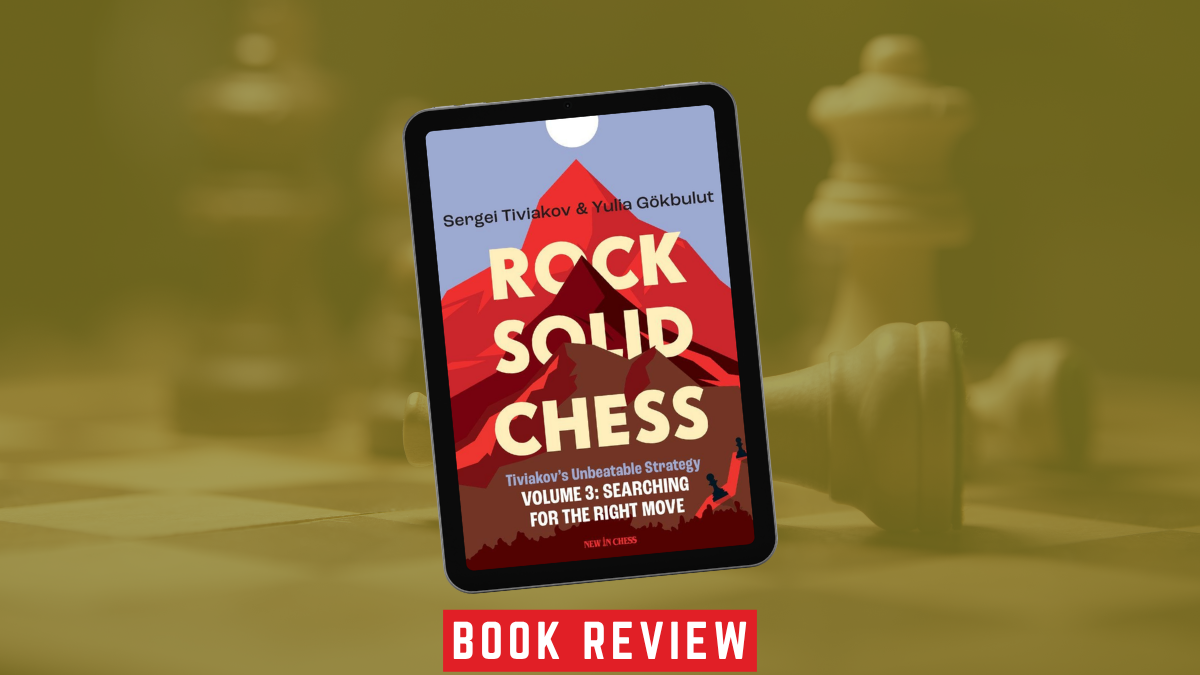
Book Review of Rock Solid Chess: Volume 3 by GM Sergei Tiviakov and WFM Yulia Gökbulut
This is the third book of the Rock Solid Chess series co-authored by GM Sergei Tiviakov and WFM Yulia Gökbulut. The two previous volumes were well-received and the first volume won the Yuri Averbakh/Isaac Boleslavsky award in 2023. While this book can be used as a standalone text, there are frequent references to the first two volumes to emphasise key points in the discussions.
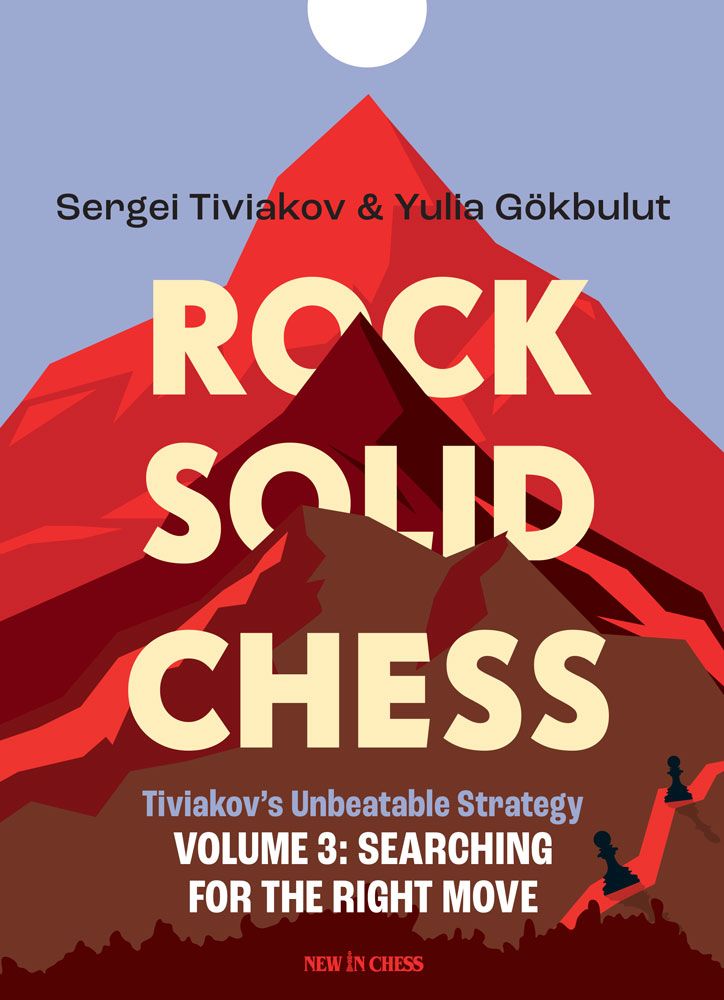
As with the previous two volumes, the book is written from Tiviakov’s perspective. He is well-known for his solid style, as confirmed by his run of 110 consecutive tournament games without loss at classical time controls during 2004 – 2005.
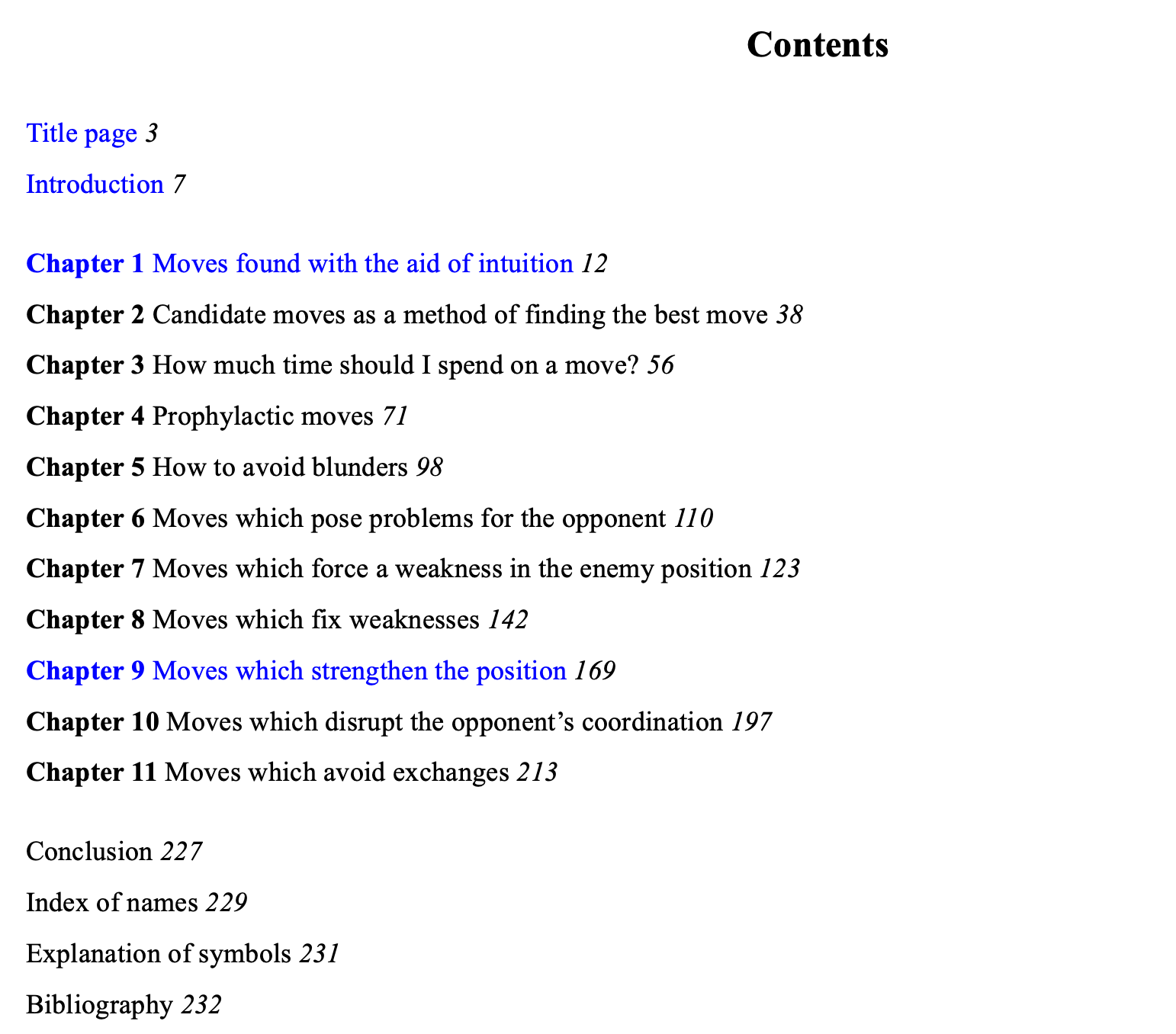
As the Table of Contents above shows, this book deals with practical strategic concepts. The authors describe the new volume as follows:
These topics are often not well-covered in books on strategy, but a mastery of the topics is very beneficial for tournament games.
The book’s format also follows the previous volumes. In this book, the material is covered in 11 chapters using 118 illustrative games that are written in a question-and-answer format. While the games of many different players are used in the examples, Tiviakov also includes a range of his own games, including losses. These games are very useful for readers to get a clear insight into his thinking in critical positions and how he coped with the situations under the relentless time constraints in a tournament game. Tiviakov is honest when discussing his own games and doesn’t shy away from self-criticism when it’s appropriate.
The role of intuition is a major theme throughout the book. Intuition has played an important role in the games of many elite players, including two world champions with very different styles, Capablanca and Tal.
- When searching for a move in highly complicated and irrational positions
- When in time trouble
- When guessing the opponent’s reaction and likely actions, for example in response to a clearly inferior move on our part.
Tiviakov admits that his intuition fails him on occasion. He writes about his choice on the 10th move of his game against Alexander Khalifman above:
He went on to lose a long game in 74 moves.
As expected, the annotations to the games make extensive use of strong chess engines, but this is balanced by excellent verbal commentary like the above example. Another useful feature is the section at the end of each chapter where the authors recommend other books to consult that complement the discussion. In addition, many guidelines (called “Points to Note” in the book) are given to help readers absorb the material.
- Candidate moves: “Before starting to calculate any particular variation, the player should look at the position and visually type in all the legal moves that make any sense. These will become candidate moves for subsequent analysis. Immediately getting carried away with calculating one particular move, turns the chess player’s attention away from other good possibilities. Spend about five seconds in the initial position considering each move that you have listed.”
- Time trouble: “If you find yourself in time trouble due to your natural maximalism, then you need to develop the habit of simply making a good move and being satisfied with it. In addition, I advise you to keep track of each move in such a way that in a game with a 40-move control, you have at least half an hour left before it is made. If you don’t have that, then for the middlegame stage for the same 25-35 moves, you should not have five minutes left but at least 20-25. Also, ensure that during the game, you have at least five to ten minutes more than your opponent. When he gets into time trouble, you will be able to use the temporary advantage to your advantage.”
- Openings: “Form your opening repertoire so that it includes continuations of both the positional and the actively attacking type. For example, against any opening of my opponent, I have four systems, all of which I have played a lot and know very well.”
Two further examples from the book are given below, with annotations from the book.
In conclusion, this book is a worthy addition to the “Rock Solid” series. The combination of good examples, the question-and-answer format, and clear commentary makes it an excellent teaching text for a range of players.

- Best Books on Chess Sacrifices: 6 Essential Reads - October 11, 2026
- Book Review: My First Chess Opening Repertoire - October 1, 2026
- Best Books to Study the Sicilian: A Complete Guide for White - September 18, 2026