
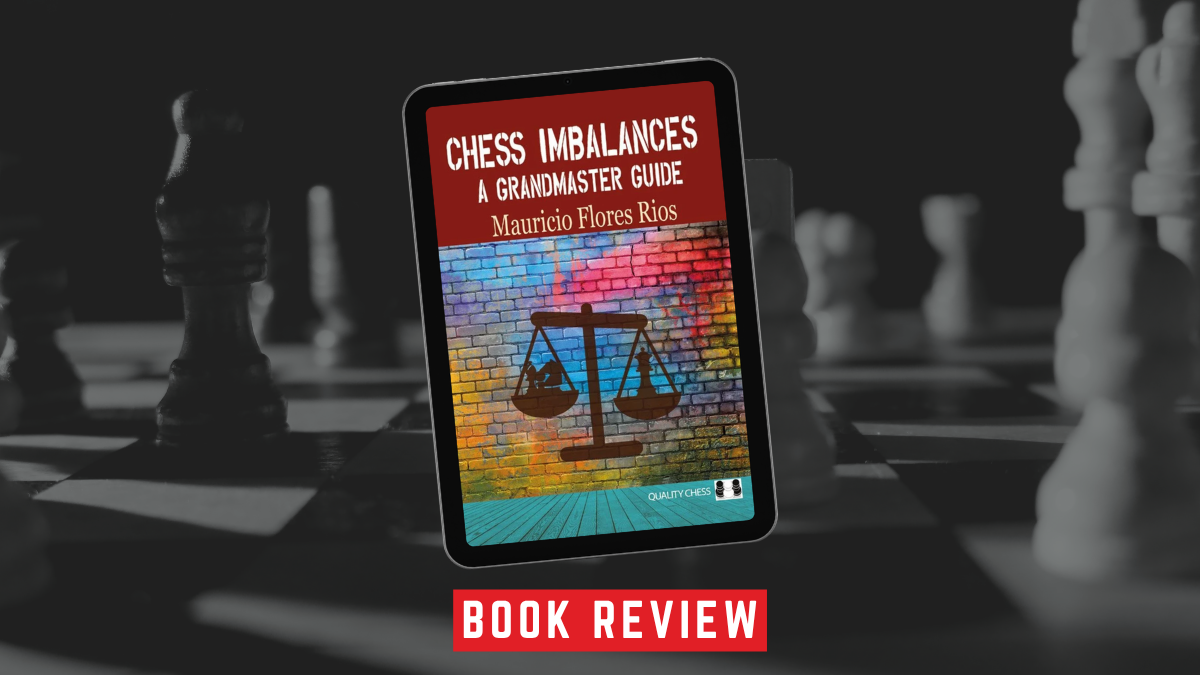
What is the core focus of Chess Imbalances — a GM Guide?
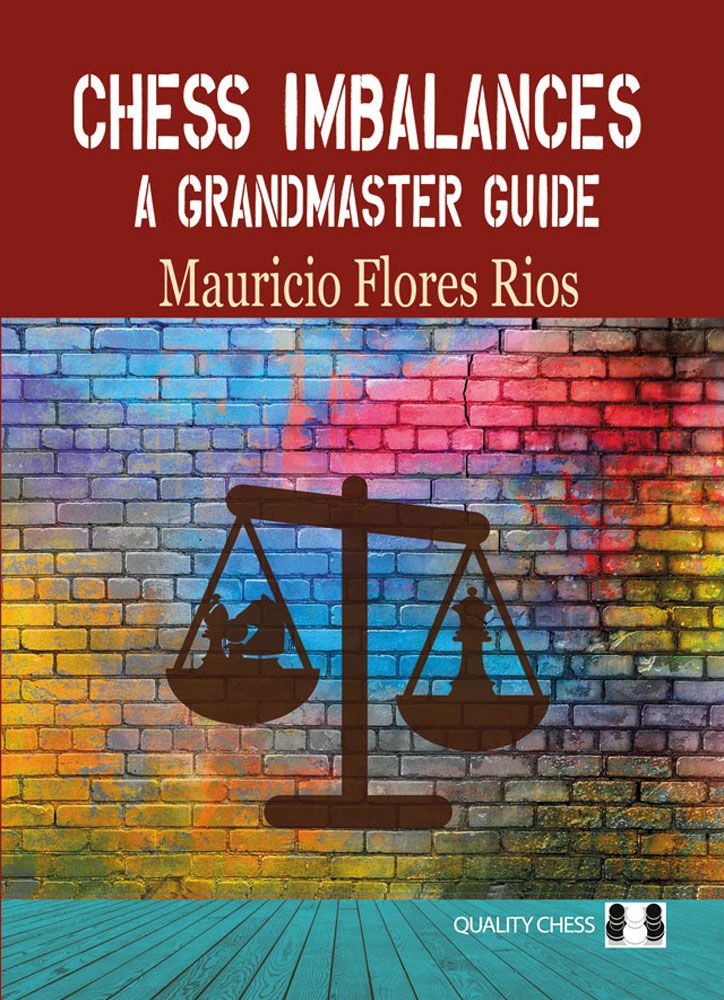
Chess Imbalances — a GM Guide, authored by GM Mauricio Flores Rios (published by Quality Chess), breaks down material imbalances into clear categories: bishop versus knight, opposite-coloured bishops, playing with and against the bishop pair, and the various trades of a queen or rook for other pieces. Built around carefully chosen examples, practical guidelines, and exercises, it turns a universal but underexplored topic into concrete decision-making criteria for the middlegame and endgame.
Book Review of Chess Imbalances – a GM Guide by GM Mauricio Flores Rios
– GM Mauricio Flores Rios
GM Mauricio Flores Rios’s previous book, Chess Structures, was published in 2015 and was very well-received. Ten years later, the author has published a new book. While the new book is not a direct sequel to the previous book, there are many references to the old book where appropriate.
As the Table of Contents above shows, the book is essentially in two halves. The first half is what the author calls Family 1, where he considers piece imbalances such as knight versus bishop. The knight versus bishop situation is usually considered equal from a material point of view. However, it can lead to very different outcomes depending if the board position favours the bishop or knight. Regarding this particular imbalance, the author concludes:
The second half of the book (Family 2) considers material imbalances, including material sacrifices. Chapter 10 includes examples that cover the preceding chapters, while the final chapter consists of 30 exercises for the reader to solve, together with their detailed solutions.
Each of the theory chapters starts with a general overview of the material to be covered and an introduction to the model games for the chapter. Each game starts with the learning objective for the game and concludes with some final remarks about the game. The author has included some of his own games in the book, and he can thus offer insights to his thinking during these games.
Most the games are deeply annotated and, of course, the author has made extensive use of computer engines to analyse the more complicated positions. This means that the book is quite dense in many places. The author comments on this aspect of the book in several places. For example, he writes in the introduction of Chapter 3 (Opposite-Colored Bishops):
The deep analysis is compensated by various rules and guidelines to allow readers to absorb the material more easily. For example, after the above comment, the author provides the following guidelines for these endings.
- Controlling “the right” color complex, and/or having the initiative, matters more than a pawn in most of the positions we will examine.
- If a position is completely even (with no weaknesses or imbalances to consider), the presence of opposite bishops could make it into a completely dead draw. However, if there’s an imbalance associated with a color complex (or a passive vs active bishop), the opposite bishops actually exacerbate the problem for the weaker side.
- The opposite bishop of the weaker side can often be relegated to the role of spectator for the rest of the game. For example, if White has a strong control over the light squares, and uses his light-squared bishop to exploit this, then it is likely that Black’s dark-squared bishop is unable to do anything, as it cannot touch the light squares at all.
However, the author is realistic about being able to obtain a definitive evaluation of a complicated position, even with the help of engines. He writes about one position:
In a practical game, I believe a win for White is more likely than a draw.”
He also notes that while a position may be equal for an engine, that doesn’t necessarily mean that a draw is the expected outcome in a human game. He writes:
Two examples from the book are given below, with annotations from the book.
[Placeholder for PGN 2]
In conclusion, this is an excellent book on an important topic. While the book can be quite demanding in places, the various rules and guidelines make the material more accessible. Hence, the book is a both a very useful teaching text and a worthy addition to the author’s previous book.

- Best Pirc and Modern Defense Books: Complete Guide - October 25, 2026
- Best Italian Game Chess Books: Complete Opening Guide - October 20, 2026
- Best Books on the English Opening: A Complete Guide - October 15, 2026