
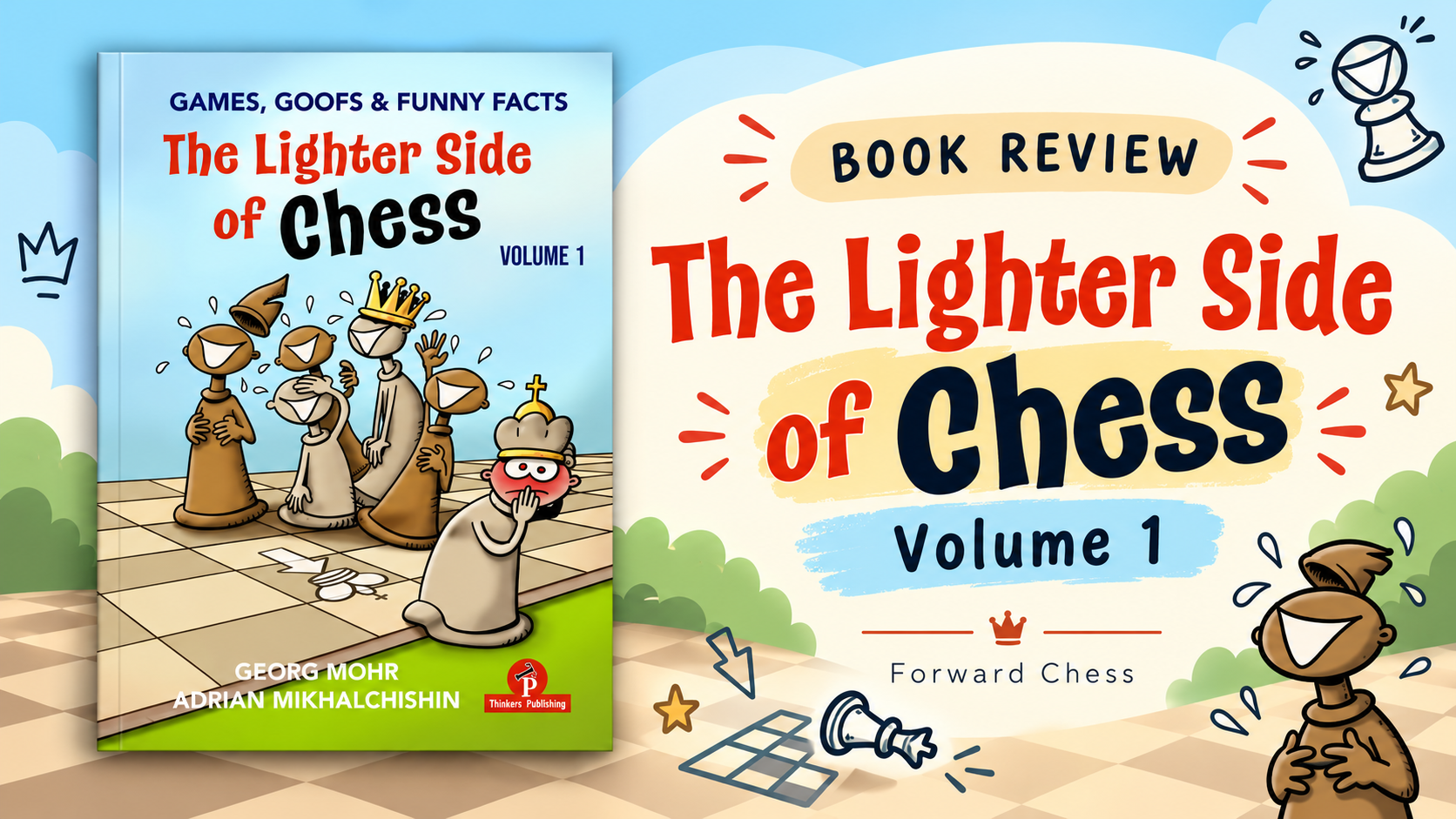
“There is more to chess than going up (or down) a few rating points each year.” – GM John Nunn.
What is The Lighter Side of Chess about?
The Lighter Side of Chess: Volume 1 by GMs Georg Mohr and Adrian Mikhalchishin (Thinkers Publishing) is a light-hearted potpourri of chess: the earliest strong players such as Anderssen and Morphy, the lives of the world champions from Steinitz to Euwe, chess history and stories, blunders, mathematics, physics, finance, wars, a bit of pop psychology, some gossip and a chess trivia quiz. It also carries instructive material on sacrifices, blunders, time trouble and resigning in a winning position, including some of the authors’ own games, with clear annotations. Its primary aim is to entertain rather than instruct, and it can be read straight through or in any order.
In contrast to many other games, chess has a rich history that has been discussed in many books over the years. Chess also has its fair share of folklore, so it’s sometimes hard to separate fact from fiction. As the title implies, this book is meant as a light-hearted potpourri of chess. Some of the subjects covered include some discussion of the earliest strongest players, such as Anderssen and Morphy, the lives of the world champions from Steinitz to Euwe, chess history and stories, blunders, mathematics, physics, finance, wars, a bit of pop psychology and some gossip. There’s even a chess trivia quiz. It would be difficult to find another chess book with the same range of topics!
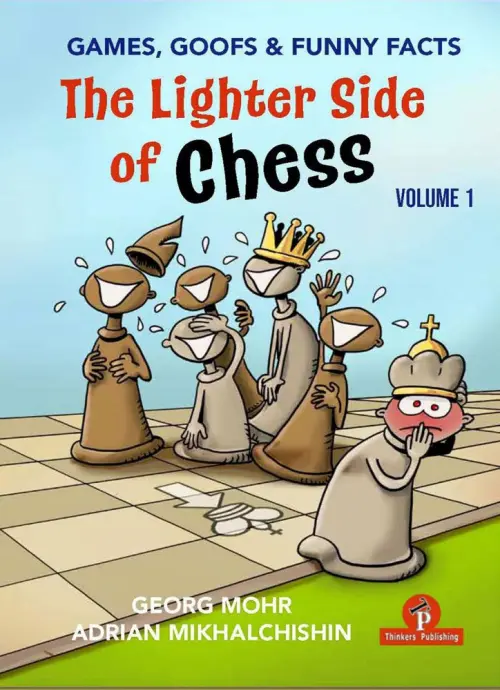
The authors are the experienced GMs Georg Mohr and Adrian Mikhalchishin. They write of their book:
“As many great minds have said, chess is a reflection of life itself. That’s why we, the authors, set out to create something different – an unconventional book that presents chess through a lens of humor, wit, and even a touch of tragicomedy. We wanted to offer a fresh perspective on the royal game, filled with jokes, anecdotes, and the remarkable (and sometimes bittersweet) stories of chess legends.”
The authors also caution readers that not everything in the book can be fully verified, and write:
“A final word of advice: not everything in this book is meant to be taken at face value. Some stories remain unverified, passed down through generations of chess players. Some we’ve borrowed from other authors, while others have been shared informally for years.”
Read the stories as stories. The authors say plainly that not everything in the book can be verified: some stories have been passed down through generations of players, and some are borrowed from other authors.
The tone of the book can best be described as breezy or light, to use the authors’ description. Nothing is very taxing, and the book can be read straight through or in a random order. The order of the chapters in the book probably encourages reading the book out of order. For example, the chapters on the world champions are interspersed with other chapters on different themes.
What’s Inside – Forward Chess Ebook
- Chess history and its legends — the earliest strong players such as Anderssen and Morphy, and the lives of the world champions from Steinitz to Euwe
- Stories, anecdotes and gossip — chess folklore, some of it unverified, as the authors themselves point out
- Chess and the wider world — mathematics, physics, finance, wars and a bit of pop psychology
- Instructive games and positions — sacrifices (including the Lasker double bishop sacrifice), blunders, time trouble, the King’s Golden Cage, and resigning in a winning position
- The authors’ own games — included to show that grandmasters are as fallible as everyone else
- Quotes from great players — from Nimzowitsch, Tarrasch, Tartakower and others, some instructive, some witty
- A chess trivia quiz
The chess content is complemented by some quotes from famous chess players and other famous people. Some are instructive, while others are quite witty:
“The beauty of a chess move lies not in its appearance but in the thought behind it. (Aron Nimzowitsch).”
“What’s the aim of gambit play in openings? To gain a reputation as an aggressive player, even at the cost of losses… (Dr. Siegbert Tarrasch).”
“Tartakower’s view on openings: There are three stages: first, you hope for an advantage, second, you think you have one; third, you realize you’ll lose!”
There is also a considerable amount of chess content that can be used for instruction, such as sacrifices, blunders, time-trouble issues, and resigning in a winning position. The authors have included some of their own games in the book to show that they are just as fallible as everyone else. The annotations are clear, without going overboard with lengthy computer-generated variations, and therefore they are quite instructive.
Two examples from the book are given below, with annotations from the book.
The first example is in the chapter on the double bishop sacrifice, which is called the Lasker sacrifice in the book.
The next example is in the chapter called “King’s Golden Cage”. The authors describe this term as follows:
“Among the most picturesque tactical motifs in chess is the so-called King’s Golden Cage. The very name sounds poetic – the king finds himself trapped inside his own fortress, surrounded by golden bars, with no way out. What at first looks like protection from his own pawns and pieces soon turns into shackles that prevent his escape.”
Entertainment first. There are instructive games and positions here, but the book’s primary focus is to entertain rather than instruct. Read it for pleasure, not as a training course.
In conclusion, we can return to Nunn’s quote. While there are some instructive games and positions in the book, its primary focus is not to instruct but to entertain. There is a good blend of history and interesting stories, and it’s a book that can be read with pleasure by all chess players. It’s therefore easy to agree with the authors when they wrote at the start of the book:
“This is a book for every chess lover, from absolute beginners to seasoned grandmasters.”

- Book Review: The Lighter Side of Chess: Volume 1 - October 29, 2026
- Best Pirc and Modern Defense Books: Complete Guide - October 25, 2026
- Best Italian Game Chess Books: Complete Opening Guide - October 20, 2026