
The best chess strategy and positional play books depend on your level, what you need to improve, and whether you prefer explanations or practical exercises.
This guide recommends eleven books on chess strategy and positional play, chosen from those available on Forward Chess and grouped into club and advanced level, with manuals and exercise books listed separately at each level.
For club players, start with Hellsten’s Mastering Chess Strategy, best from about 1600–1800 and up; for advanced players, Sakaev and Landa’s The Complete Manual of Positional Chess, Volume 1 is the systematic manual and Aagaard’s Grandmaster Preparation books are the exercise pick. Every recommendation rests on named, attributed reviews, and where that evidence is thin, the entry says so.
Last updated November 2026.
Which chess strategy book suits which level?
For club players, Hellsten, Srokovski, Bronznik and Terekhin, and Franco are the manuals, and Bricard and Dvoretsky are the exercise books; for advanced players, Sakaev and Landa and Suba are the manuals, and Aagaard and Moranda are the exercise books. Franco’s and Bronznik and Terekhin’s books are recommended at advanced level too.
These books start at club level. None of the beginner-level strategy books we assessed had enough independent review evidence to recommend.
| Book | Author | Publisher | Year | Pages (approx.) | Level | Type | Strength of evidence |
|---|---|---|---|---|---|---|---|
| Mastering Chess Strategy | Johan Hellsten | Everyman Chess | 2010 | 490 | Club (about 1600–1800 and up) | Manual | Two expert reviews |
| Chess Training for Post-Beginners | Yaroslav Srokovski | New In Chess | 2014 | 255 | Club (about 1800 and up) | Manual | One expert review, plus a second shorter one |
| Techniques of Positional Play | Valeri Bronznik and Anatoli Terekhin | New In Chess | 2013 | 255 | Club (about 1800 and up) and advanced | Manual | One expert review |
| Planning: Move by Move | Zenón Franco | Everyman Chess | 2019 | 415 | Club (about 1800 and up) and advanced | Manual (annotated games) | Two expert reviews |
| Strategic Chess Exercises | Emmanuel Bricard | New In Chess | 2018 | 225 | Club | Exercises | One expert review and one podcast review |
| Maneuvering: The Art of Piece Play | Mark Dvoretsky | Russell Enterprises | 2016 | 210 | Club (from lower club level) | Exercises | One expert review |
| The Complete Manual of Positional Chess, Volume 1 | Konstantin Sakaev and Konstantin Landa | New In Chess | 2016 | 320 | Advanced (about 2000–2200) | Manual | Two expert reviews |
| Dynamic Chess Strategy | Mihai Suba | New In Chess | 2010 | 210 | Advanced | Manual | Two expert reviews |
| Grandmaster Preparation: Positional Play | Jacob Aagaard | Quality Chess | 2012 | 310 | Advanced | Instruction and exercises | Two expert reviews |
| Grandmaster Preparation: Strategic Play | Jacob Aagaard | Quality Chess | 2013 | 305 | Advanced | Instruction and exercises | One expert review |
| Supreme Chess Understanding: Statics & Dynamics | Wojciech Moranda | Thinkers Publishing | 2023 | — | Advanced (about 2200 and up) | Exercises | One expert review |
Best Chess Strategy and Positional Play Books by Level
For club players, Hellsten’s Mastering Chess Strategy is the broad course, Srokovski’s Chess Training for Post-Beginners is a shorter one, Bronznik and Terekhin’s Techniques of Positional Play is organized as a set of techniques, and Franco’s Planning: Move by Move teaches planning through annotated games. For practice, Bricard’s Strategic Chess Exercises and Dvoretsky’s Maneuvering are exercise books. Srokovski, Bronznik and Terekhin, and Franco are best from about 1800 and up.
Mastering Chess Strategy — Johan Hellsten
Hellsten’s Mastering Chess Strategy (Everyman Chess) is the club pick in this guide: a broad course in chess strategy that Nate Solon calls “probably the best chess strategy book ever written”, best from about 1600–1800 and up. 2010, about 490 pages.
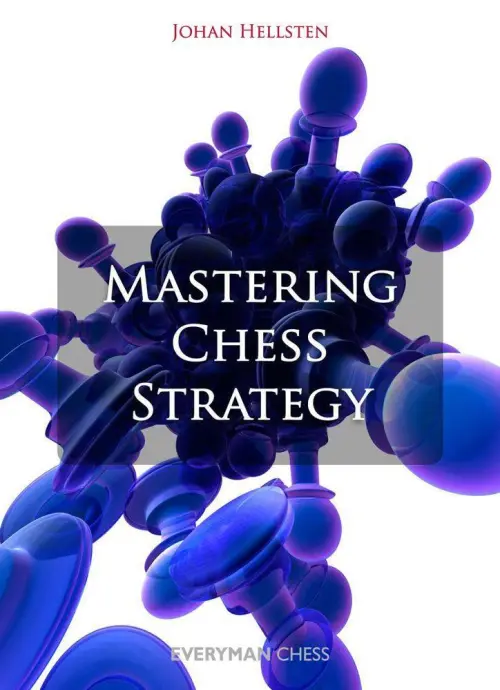
Nate Solon, writing on his Zwischenzug newsletter, says “It’s organized in a very logical way, with lots of examples, and extensive, clear commentary,” and calls it “probably the best chess strategy book ever written.” Uwe Bekemann’s review on bekemann.de calls it, for the audience he names, “ein empfehlenswertes Buch” (a book worth recommending) and sees the aspiring player who is keen to learn at the center of its audience.
It is not easy. Solon notes that “most of the examples are from grandmaster games”, and writes “I think this book is best for players 1600+, probably 1800+ to get the most out of it.” On Amazon it averages 4.7 out of 5 from 225 ratings.
Chess Training for Post-Beginners — Yaroslav Srokovski
Srokovski’s Chess Training for Post-Beginners: A Basic Course in Positional Understanding (New In Chess) is a shorter course in positional play; despite its title, IM John Donaldson suggests about 1800 and up for most Western readers. 2014, about 255 pages.
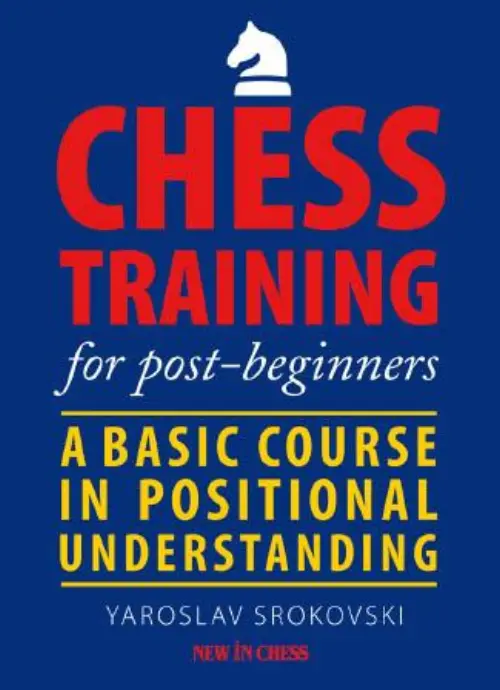
IM John Donaldson rates it “Recommended” and writes, “It is standard middlegame fare but the examples are well chosen and the explanations clear.” On level, he writes: “The target audience of 1400-2200 might be appropriate in countries with a high standard of play like the Ukraine, but for Western Europe and the United States where most players develop without a trainer and have gaps in their knowledge 1800-2400 might be closer to the mark.” P.P.O. Kane, in the Compulsive Reader, calls it “an excellent primer of positional play.”
Reader ratings are split: it averages 3.30 out of 5 from 20 ratings on Goodreads but 4.7 out of 5 from 70 ratings on Amazon.
Techniques of Positional Play — Valeri Bronznik and Anatoli Terekhin
Bronznik and Terekhin’s Techniques of Positional Play: 45 Practical Methods to Gain the Upper Hand in Chess (New In Chess) is organized as a set of named techniques rather than a course, for players from about 1800 up. 2013, about 255 pages.
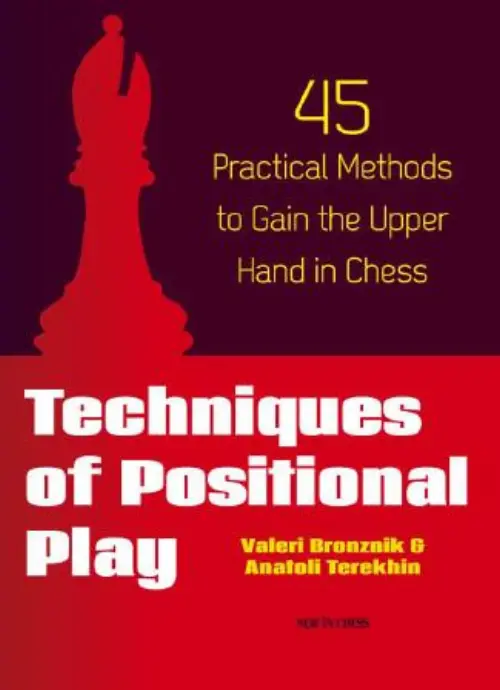
IM John Donaldson writes that “The examples are well chosen and systematically organized” and that “it should prove to be of great value to many players, especially those in the 1800-2400 range.” That one review of the English edition is the expert evidence we found. On Amazon it averages 4.6 out of 5 from 104 ratings.
Planning: Move by Move — Zenón Franco
Franco’s Planning: Move by Move (Everyman Chess) teaches planning through annotated top-level games, in the series’ question-and-answer format, for players from about 1800 up. 2019, about 415 pages.
Richard James, reviewing it for British Chess News, writes of “excellent and often beautiful top level games with first rate annotations” and says “I can recommend the book very highly”. IM John Donaldson calls it “a first-rate instructional effort” and writes that “Players from 1800-2400 will benefit”.
Both reviewers set the floor at about 1800: James writes that “to gain full benefit from the book, you’d probably need to be about 1800+ strength”, and that “the games are not easy”. His other reservations are minor, among them that “The games disproportionately favour White”.
Strategic Chess Exercises — Emmanuel Bricard
Bricard’s Strategic Chess Exercises (New In Chess) is a book of strategic exercises with explained solutions, for club players. 2018, about 225 pages, translated from the French.
Uwe Bekemann’s review on bekemann.de says it gives “den Autodidakten unter den Klubspielern sehr gute Hilfestellung” (very good help to the self-taught among club players), and agrees with the author that the broad range of club players is its main audience. The Perpetual Chess Podcast called it “a lesser-known but excellent collection of puzzles and insightful analysis” and included it among “Great Books for Intermediate Level and Up”.
The reservations are about effort. Bekemann notes there is a great deal of text to read, and the podcast describes it, together with the other book in that episode, as “reasonably advanced”.
Maneuvering: The Art of Piece Play — Mark Dvoretsky
Dvoretsky’s Maneuvering: The Art of Piece Play (Russell Enterprises) is a training book of exercises on piece play, for players from lower club level up. 2016, about 210 pages.
Uwe Bekemann’s review on bekemann.de calls it “ein sehr qualifiziertes Werk” (a very well-qualified work) that works by “learning by doing”, with model solutions to its 228 exercises. He says it is for players of almost any strength once a lower club level is reached, but warns that the exercises will quickly take less advanced players to their limits or beyond, though he adds that working through the solutions will still improve them.
Note what it is not: Bekemann writes that “Es wird keine Theorie des Positionsspiels aufgearbeitet” — it does not set out a theory of positional play. Use it alongside one of the manuals above. It rests on this one review.
Which chess strategy books suit advanced players?
For advanced players, Sakaev and Landa’s The Complete Manual of Positional Chess, Volume 1 is the systematic manual, Suba’s Dynamic Chess Strategy is a classic on dynamic play, and Aagaard’s Grandmaster Preparation books and Moranda’s Supreme Chess Understanding are the exercise books. Franco’s Planning: Move by Move and Bronznik and Terekhin’s Techniques of Positional Play, above, are recommended at this level too.
The Complete Manual of Positional Chess, Volume 1 — Konstantin Sakaev and Konstantin Landa
Sakaev and Landa’s The Complete Manual of Positional Chess: The Russian Chess School 2.0 – Opening and Middlegame (New In Chess) is a systematic manual for players of about 2000–2200, the level its authors aim it at; Uwe Bekemann calls it “ein qualifiziertes Schulungs- und Trainingsbuch” (a well-qualified teaching and training book). 2016, about 320 pages.
Which volume? It is the first of two volumes; this entry covers Volume 1 only.
Uwe Bekemann’s review on bekemann.de calls it “ein qualifiziertes Schulungs- und Trainingsbuch” (a well-qualified teaching and training book) for the already strong player of about 2000–2200 Elo. Mark Haast, reviewing both volumes together for Schaaksite, calls the set “een echte aanrader voor schaaktrainers en zelfverbeteraars” — a real recommendation for chess trainers and self-improvers.
Haast also has reservations: he did not expect the tactical themes he found in a book on positional chess (“Dit soort tactische thema’s had ik niet verwacht in een boek over positioneel schaak”), and notes that the book gives no definition of positional chess.
Dynamic Chess Strategy — Mihai Suba
Suba’s Dynamic Chess Strategy (New In Chess) is a classic on dynamic strategy, in a 2010 extended and updated edition of the 1991 original, for advanced players. 2010, about 210 pages.
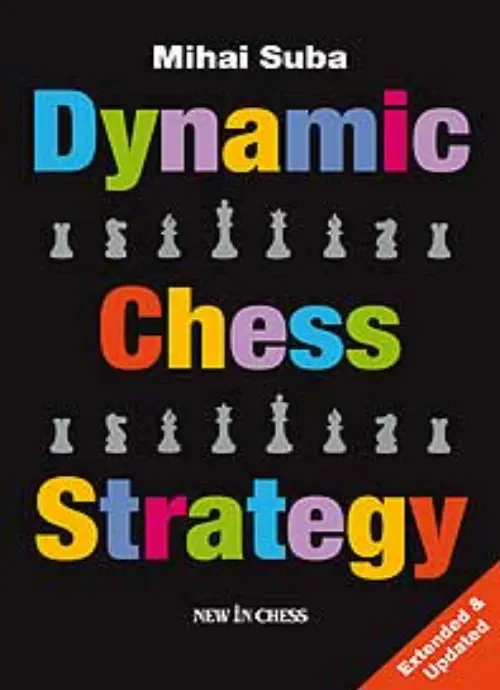
IM John Watson, reviewing this edition in The Week in Chess, calls it “a chess classic in which every aspiring player can find inspiration and wisdom”, and writes that Suba’s insights “ring as true today as they did at the time.” GM Bryan Smith, on Chess.com, writes “I highly recommend this book.”
Both have reservations. Watson writes, “A minor complaint: the new material could use a great deal of editing,” while finding the original annotations “well-edited and clear”. Smith writes that “The only downside that I can think of is that it is not particularly organized,” though he adds that “it doesn’t take away from the book in any way.”
Grandmaster Preparation: Positional Play and Strategic Play — Jacob Aagaard
Aagaard’s Grandmaster Preparation: Positional Play and Grandmaster Preparation: Strategic Play (Quality Chess) are demanding training books for strong players, part instruction and part exercises; IM John Donaldson rates Positional Play “Highly Recommended”. Positional Play: 2012, about 310 pages. Strategic Play: 2013, about 305 pages.
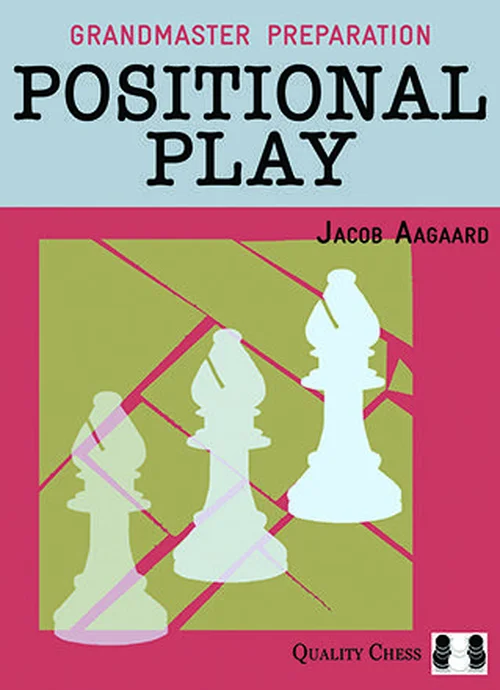
For Positional Play, IM John Donaldson rates it “Highly Recommended” and writes, “Even those unable to solve the positions will derive benefit from the effort and the through [sic] solutions.” Uwe Bekemann, on bekemann.de, calls it “Ein bemerkenswertes Buch!” (a remarkable book) and counts “vor allem den schon spielstarken Leser” — above all the already strong reader — as its audience. He notes that the book sets different solving times for players above and below 2200.
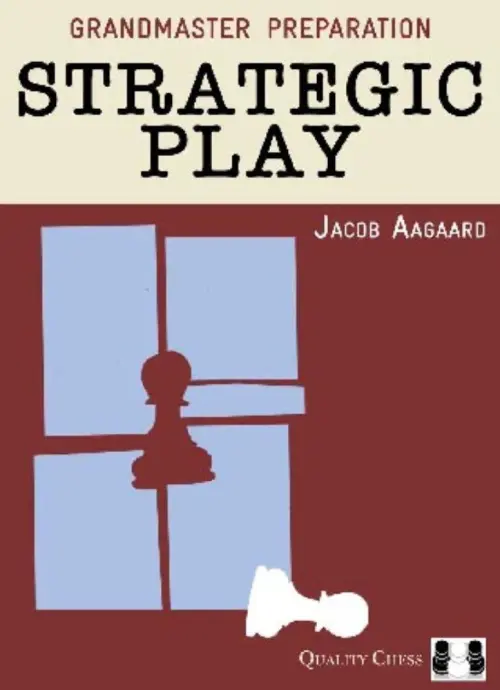
For Strategic Play, the evidence is one review. Bekemann calls it “Ein sehr qualifiziertes und anspruchsvolles Werk” (a very well-qualified and demanding work), and writes that even for the upper club player “wird es überwiegend eine Herausforderung sein” — it will mostly be a challenge.
Supreme Chess Understanding: Statics & Dynamics — Wojciech Moranda
Moranda’s Supreme Chess Understanding: Statics & Dynamics (Thinkers Publishing) is a test book for advanced players, about 2200 and up, and half of its questions are tactical. 2023. Its three chapters each hold 20 quiz questions, alternating between statics (positional play) and dynamics (tactical play).
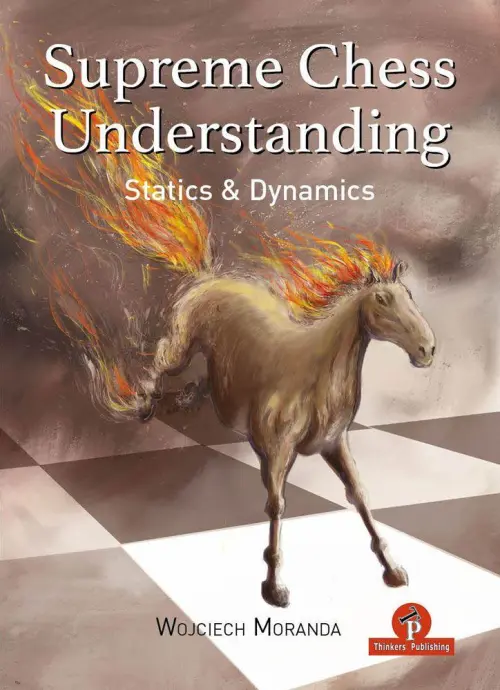
Richard James, reviewing it for British Chess News, calls it “in many ways, an outstanding book”, and writes that “Ambitious players of, say, 2200+ strength will benefit from working through the book sequentially”. Below that, he says, players from about 1800 up will learn a lot from just reading through the answers, but it is “probably not a good choice for novice or intermediate players”. It rests on this one review.
The club books at advanced level
Franco’s Planning: Move by Move and Bronznik and Terekhin’s Techniques of Positional Play carry on at this level: IM John Donaldson places both in the 1800–2400 range.
What about How to Reassess Your Chess?
Jeremy Silman’s How to Reassess Your Chess is not on Forward Chess in English, so it is not in the list above; Forward Chess carries the German translation, Schach mit neuem Schwung. On Amazon it has by far the largest body of ratings of any strategy book we looked at, averaging 4.7 out of 5 from 1,568 ratings, probably pooled across its editions; the current edition is the fourth (Siles Press, 2010, about 660 pages).
Forum readers on Chess.com give a wide range: some place it from about 1500–1600 up, while others start it lower. Its imbalances method has a published critic: IM Willy Hendriks disputes the approach in Move First, Think Later.
How were these books chosen?
We started from the books on chess strategy and positional play, on Forward Chess and off it, checked what each one covers, and kept the ones that teach general strategy rather than a single opening or pawn structure. Each was then judged level by level on what named reviewers and independent readers say about it.
A book is recommended at a level only where that evidence supports it, so several well-known titles are not here: some had too little independent review evidence, some had credible criticism of the edition on sale, and some are not available on Forward Chess. A few books that did meet the evidence bar were also left out because they overlap with books already here or sit at the edge of the topic.
Where praise appeared only on a publisher’s page, came from someone connected to the book, or described a different edition or translation, we did not count it as independent.
Frequently asked questions
What is the best chess strategy book for club players?
Johan Hellsten’s Mastering Chess Strategy (Everyman Chess) is the club pick here: Nate Solon calls it “probably the best chess strategy book ever written”, and Uwe Bekemann recommends it. Solon places it at 1600+, probably 1800+.
Is there a chess strategy book for beginners?
None of the beginner-level strategy books we assessed had enough independent review evidence to recommend, so the books in this guide start at club level. Chess Training for Post-Beginners is not a beginner book despite its title: IM John Donaldson suggests about 1800 and up for most Western readers.
What is the best chess strategy book for advanced players?
Sakaev and Landa’s The Complete Manual of Positional Chess, Volume 1, aimed at about 2000–2200, is the systematic manual for advanced players. For exercises, Aagaard’s Grandmaster Preparation: Positional Play, which IM John Donaldson rates “Highly Recommended”. Moranda’s Supreme Chess Understanding is a test book for about 2200 and up.
Is there a good book of strategic chess exercises?
Yes. At club level, Bricard’s Strategic Chess Exercises and Dvoretsky’s Maneuvering (for piece play) are the exercise books. At advanced level, the exercise books are Aagaard’s Grandmaster Preparation: Positional Play and Strategic Play, and Moranda’s Supreme Chess Understanding, half of whose questions are tactical.
What is the best book on planning in chess?
Among the books in this guide, Zenón Franco’s Planning: Move by Move, which teaches planning through annotated top-level games. Richard James and IM John Donaldson both recommend it, from about 1800 up.
Is How to Reassess Your Chess on Forward Chess?
No. Jeremy Silman’s How to Reassess Your Chess is not on Forward Chess in English; Forward Chess carries the German translation, Schach mit neuem Schwung.
For beginners
- None of the beginner-level strategy books we assessed had enough independent review evidence to recommend, so the books in this guide start at club level.
Club — manuals
- Mastering Chess Strategy by Hellsten — the club pick: a broad course in chess strategy, best from about 1600–1800 and up.
- Chess Training for Post-Beginners by Srokovski — a shorter course in positional play; despite its title, about 1800 and up.
- Techniques of Positional Play by Bronznik and Terekhin — organized as a set of named techniques, from about 1800 up.
- Planning: Move by Move by Franco — planning taught through annotated top-level games, from about 1800 up.
Club — exercises
- Strategic Chess Exercises by Bricard — strategic exercises with explained solutions.
- Maneuvering: The Art of Piece Play by Dvoretsky — exercises on piece play, from lower club level up; use it alongside a manual.
Advanced — manuals
- The Complete Manual of Positional Chess, Volume 1 by Sakaev and Landa — the systematic manual, aimed at about 2000–2200.
- Dynamic Chess Strategy by Suba — a classic on dynamic strategy.
- Franco’s and Bronznik and Terekhin’s books, above, carry on at this level too.
Advanced — exercises
- Grandmaster Preparation: Positional Play and Strategic Play by Aagaard — demanding training books for strong players, part instruction and part exercises.
- Supreme Chess Understanding by Moranda — a test book for about 2200 and up; half of its questions are tactical.

- Best Chess Strategy and Positional Play Books: Complete Guide - November 14, 2026
- Best Slav and Semi-Slav Defense Books: Complete Guide - November 10, 2026
- Best Dutch Defense Books: Complete Guide - October 31, 2026