
The best Slav and Semi-Slav Defense books depend on your playing level and whether you’re looking for an introduction or a complete repertoire.
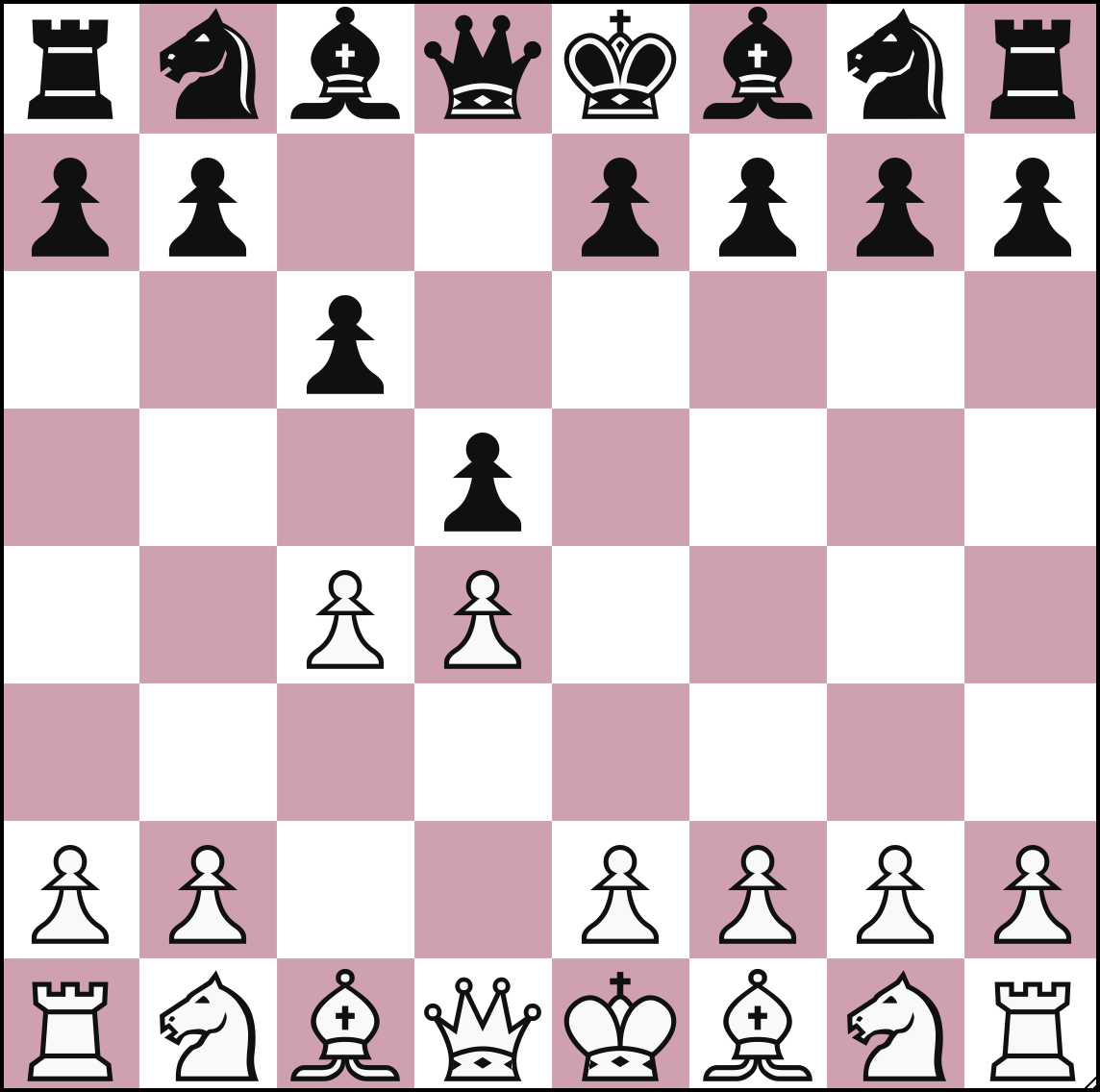
The Slav (1.d4 d5 2.c4 c6) and the Semi-Slav (the same start with …e6, as in 3.Nf3 Nf6 4.Nc3 e6) are related but separate defenses, and most books treat one or the other.
This guide recommends five books: Martin’s First Steps: The Queen’s Gambit for beginners on either side, Kornev’s A Practical Black Repertoire with d5, c6 for club players as Black, Avrukh’s Grandmaster Repertoire 17: The Classical Slav and Schandorff’s Grandmaster Repertoire 20: The Semi-Slav for advanced players as Black, and Bologan’s The Chebanenko Slav According to Bologan, a study of one Slav line rather than a full repertoire, for advanced players who already play it. Four other White books cover these defenses and are listed for their coverage only, not recommended on reviews.
Last updated October 2026.
A general note: opening theory keeps moving, and the books recommended here were published between 2008 and 2017. They remain our recommendations, but check sharp main lines against a current database before relying on them in your games.
Best Slav Books for beginners: both sides
For a beginner on either side of the Slav, start with Martin’s First Steps: The Queen’s Gambit, an introduction to the Queen’s Gambit from both sides of the board with chapters on the Slav and the Semi-Slav.
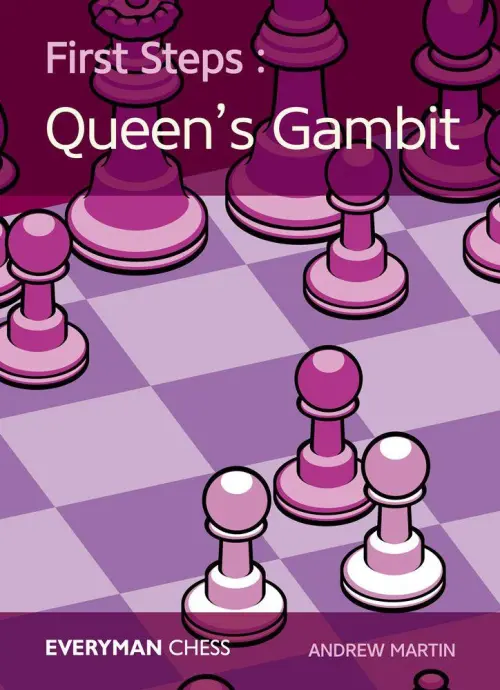
First Steps: The Queen’s Gambit — Andrew Martin
Everyman Chess, 2016.
A beginner’s introduction to the Queen’s Gambit from both sides of the board, with chapters on the Slav (chapter 6) and the Semi-Slav and Meran (chapter 7) alongside the Queen’s Gambit Accepted and Declined. Uwe Bekemann, writing in German on bekemann.de, called it an excellent book for beginners and players who are not yet strong, and said Martin explains the material in exemplary fashion (translated). He is also clear that it teaches know-how rather than providing a repertoire. No review we found comments on its Slav chapters in particular.
Best Slav Books for Black
For club players, Kornev’s A Practical Black Repertoire with d5, c6 is the place to start; for advanced players, Avrukh’s Grandmaster Repertoire 17: The Classical Slav. Bologan’s book on the Chebanenko (4…a6) is a deep study of one line rather than a full repertoire. No Black Slav repertoire in this guide is recommended for beginners; they can start with Martin’s introduction above.
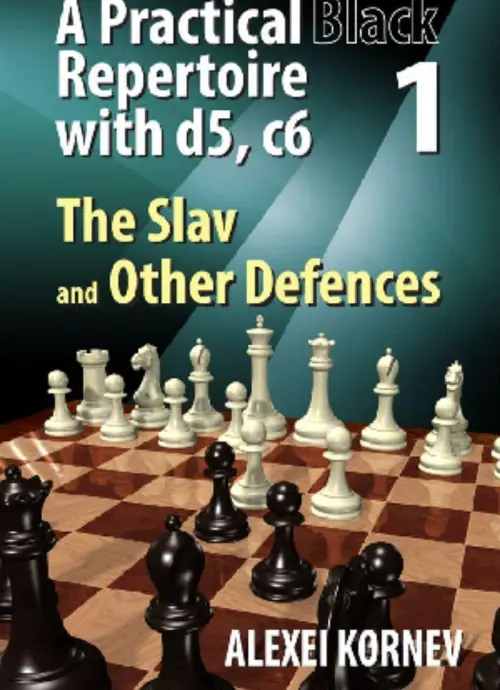
A Practical Black Repertoire with d5, c6 — Vol. 1: The Slav and Other Defences — Alexei Kornev
Chess Stars, 2017.
A Slav-based repertoire against 1.d4. According to Bekemann’s review, the first 22 of its 26 chapters cover the Slav (including lines that reach Semi-Slav positions), and the remaining four deal with White systems that avoid c2-c4, such as the London. Bekemann found that it can be used on its own, without the second volume, and that it guides the reader to use the repertoire with understanding.
Two things to know. The book is "Theorie pur" in Bekemann’s phrase — pure theory, with no illustrative games — and he found the four chapters on systems without c2-c4 only sketched.
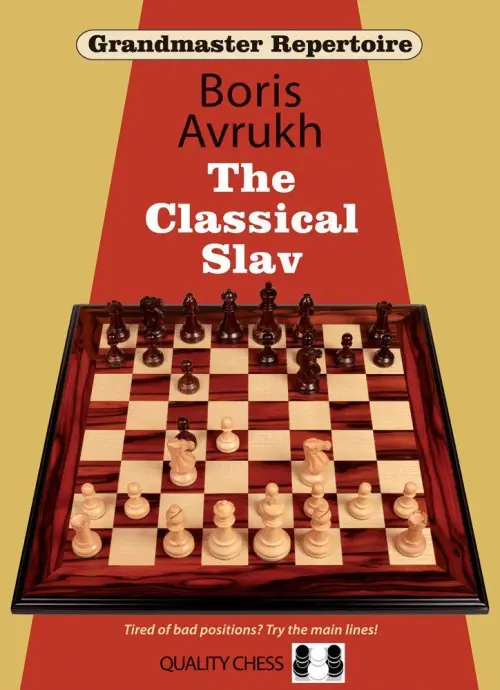
Grandmaster Repertoire 17: The Classical Slav — Boris Avrukh
Quality Chess, 2014.
A complete Classical Slav repertoire built on 4…dxc4 5.a4 Bf5, with the main lines after 6.e3 and 6.Ne5 as well as White’s other tries, from the Exchange to 3.Bf4. Reviewing it, IM John Donaldson wrote that it “may be his best yet,” called it “a complete repertoire that provides aggressive but solid play,” and rated it “Highly Recommended” as “a first rate opening repertoire book that should prove useful for a wide range of players from 1800 on up.” Bekemann gave it a clear buy recommendation (translated), while noting that the reader must be past the stage of an inexperienced player.
Donaldson’s caveats are about style rather than quality: of the sharp Glasgow Kiss line he wrote that “not all Slav players will find this type of play to their liking” (against 4.e3, Avrukh also offers 4…a6), and in the Exchange Slav, Black “has to be prepared to play a long hard game.”
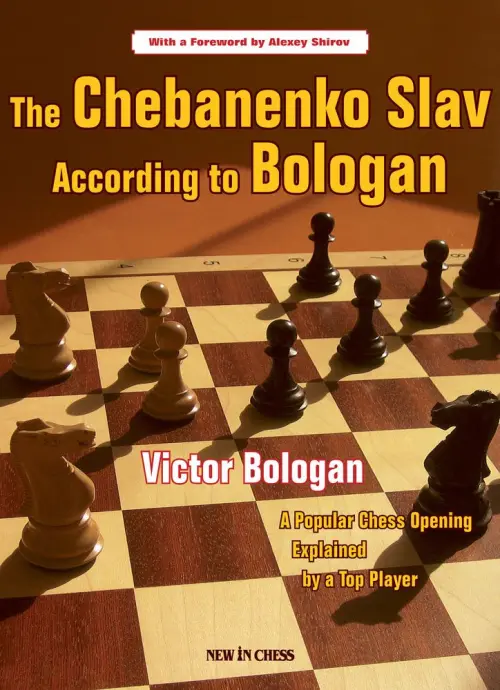
The Chebanenko Slav According to Bologan — Victor Bologan
New In Chess, 2008. A study of one Slav line, not a full repertoire.
A detailed treatment of the Chebanenko (1.d4 d5 2.c4 c6 3.Nc3 Nf6 4.Nf3 a6), which its publisher says teaches the best methods for both Black and White. Donaldson found the work “of a uniformly high quality” while noting “a few glitches,” and called it “Highly recommended for those who play the …a6 Slav.” Arne Moll wrote that it looks “extremely well-researched and written with a lot of passion.”
The warning is about how it reads. Moll found all its completeness “too much” for his own use, while granting it is useful for players who want to prepare thoroughly, and two Amazon readers called it hard to follow. Donaldson also notes that it is not a complete guide to every …a6 treatment of the Slav. On the evidence, it suits an advanced player who already plays this line.
Best Semi-Slav Books for Black
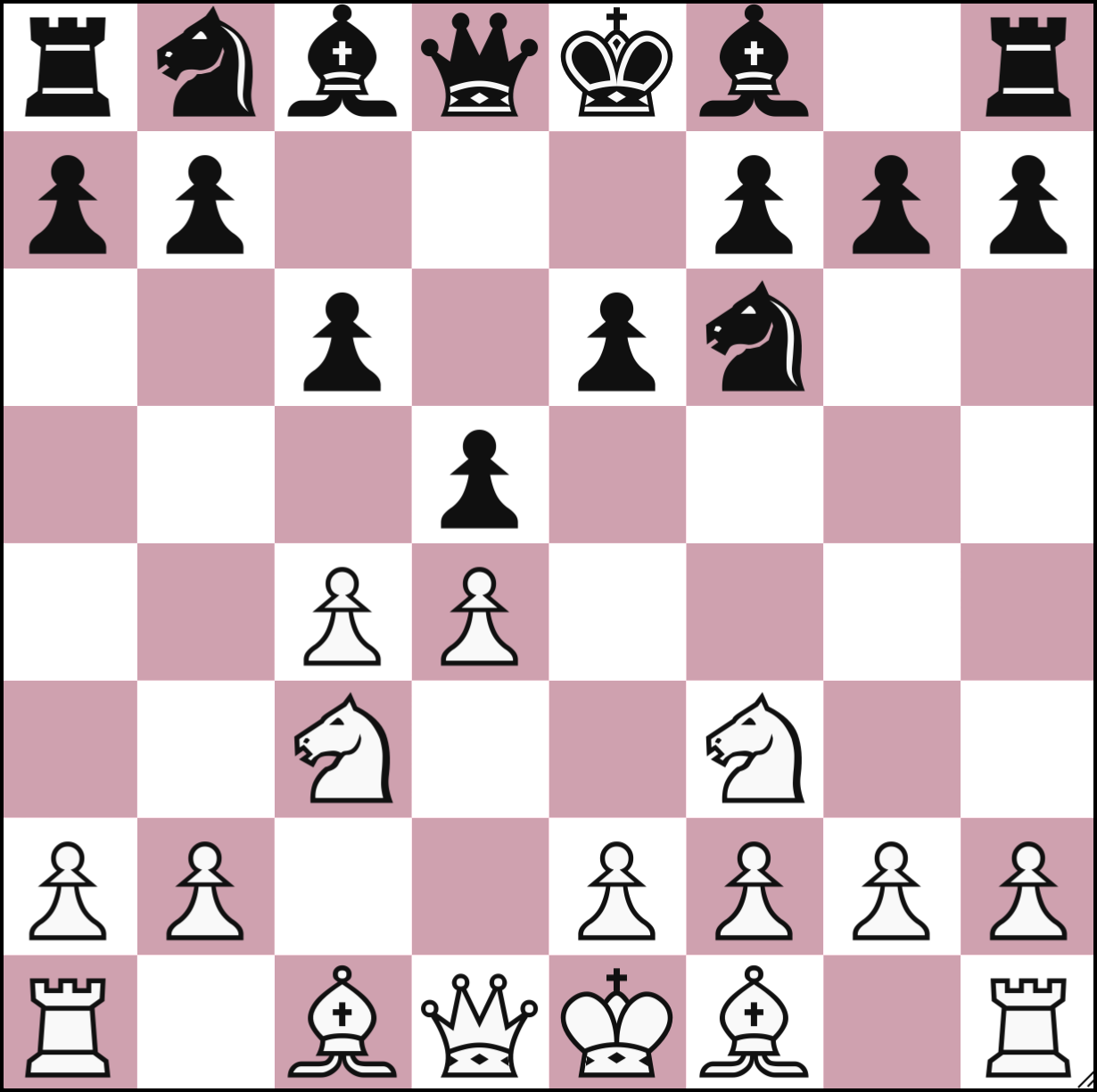
For advanced players, Schandorff’s Grandmaster Repertoire 20: The Semi-Slav is the recommendation. No dedicated Semi-Slav book is recommended for club players, but Kornev’s club repertoire above meets 4.Nc3 with the Semi-Slav (4…e6, including the 5.Bg5 dxc4 Botvinnik), so club players can use it here too. Beginners can use Martin’s introduction, which has a Semi-Slav chapter.
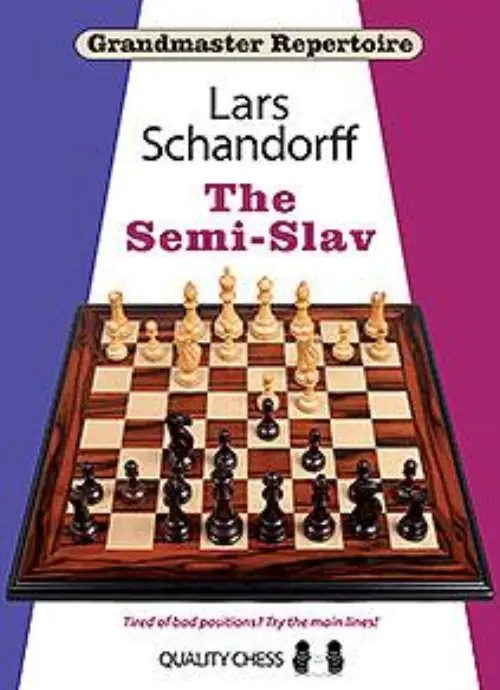
Grandmaster Repertoire 20: The Semi-Slav — Lars Schandorff
Quality Chess, 2015.
A Semi-Slav repertoire covering the Botvinnik, Moscow and Anti-Moscow, Meran and Anti-Meran lines. Bekemann called it “ein weiterer ausgezeichneter Spross” of the Grandmaster Repertoire series — another excellent addition — and placed it at the advanced over-the-board player and the correspondence player. He also warned that the Botvinnik requires memorizing a good deal of concrete analysis.
There is a known gap. In comments on Quality Chess’s own blog after publication, a reader pointed out that 6.b3, a sideline against the Meran (the book does cover the main 6.Qc2 Anti-Meran), is not covered, and Quality Chess’s Nikos Ntirlis confirmed: "Indeed, 6.b3 was an omission." He added that the line itself "is not considered anything really special."
Facing the Slav and Semi-Slav as White
No White book is recommended here on reviews. Cheparinov’s book is the only White book in this guide dedicated to these defenses, and we found no independent reviews of it. Beginners can start with Martin’s First Steps: The Queen’s Gambit above, which covers both sides.
White books that cover the Slav and Semi-Slav
These four White books all cover these defenses. They are listed for their coverage, not recommended on reviews:
- Ivan Cheparinov, Cheparinov’s 1.d4! A Complete Repertoire for White, Volume 2: The Slav and Semi-Slav (Thinkers Publishing, 2022): the only White book in this guide devoted to these two defenses.
- Boris Avrukh, Grandmaster Repertoire 1B: The Queen’s Gambit (Quality Chess, 2016): chapters 7–18 on the Slav, within a Queen’s Gambit repertoire.
- Lars Schandorff, Playing 1.d4: The Queen’s Gambit (Quality Chess, 2012): chapters on the Slav, the Semi-Slav and the …a6 Slav. It is the second edition of his 2009 Playing the Queen’s Gambit.
- Viktor Moskalenko, An Attacking Repertoire for White with 1.d4 (New In Chess, 2019): meets the Slav with the Exchange Variation (chapter 8) and has a chapter against the Triangle, a Semi-Slav set-up without …Nf6 (chapter 10).
Comparison
| Book | Side | Covers | Level | Year |
|---|---|---|---|---|
| Martin, First Steps: The Queen’s Gambit | Both (QG introduction) | Queen’s Gambit, incl. Slav and Semi-Slav chapters | Beginner | 2016 |
| Kornev, A Practical Black Repertoire with d5, c6 — Vol. 1 | Black | Slav and Semi-Slav (vs 4.Nc3) | Club | 2017 |
| Avrukh, Grandmaster Repertoire 17: The Classical Slav | Black | Classical Slav | Advanced | 2014 |
| Bologan, The Chebanenko Slav According to Bologan | Black (covers both sides) | Chebanenko (4…a6) only | Advanced | 2008 |
| Schandorff, Grandmaster Repertoire 20: The Semi-Slav | Black | Semi-Slav | Advanced | 2015 |
Frequently asked questions
What is the difference between the Slav and the Semi-Slav?
The Slav starts 1.d4 d5 2.c4 c6; the Semi-Slav is the same start with …e6, as in 3.Nf3 Nf6 4.Nc3 e6. They are related but separate defenses, and most books treat one or the other.
What is the best book on the Slav Defense?
For club players, Kornev’s A Practical Black Repertoire with d5, c6. For advanced players, Avrukh’s Grandmaster Repertoire 17: The Classical Slav, which Donaldson considers useful “from 1800 on up.”
What is the best book on the Semi-Slav?
Schandorff’s Grandmaster Repertoire 20: The Semi-Slav, for advanced players. It does not cover the 6.b3 sideline against the Meran, an omission its publisher has acknowledged.
Is there a good Slav book for beginners?
Martin’s First Steps: The Queen’s Gambit, a beginner’s introduction from both sides of the board with chapters on the Slav and the Semi-Slav. It teaches know-how rather than a repertoire, and no review we found comments on its Slav chapters in particular. No Black Slav repertoire in this guide is recommended for beginners.
What is the best book on the Chebanenko Slav?
Bologan’s The Chebanenko Slav According to Bologan, a study of one Slav line rather than a full repertoire. Donaldson called it “Highly recommended for those who play the …a6 Slav,” and it suits an advanced player who already plays this line.
What should White read against the Slav?
Beginners can start with Martin’s First Steps: The Queen’s Gambit. Beyond that, no White book is recommended here on reviews. Cheparinov’s Volume 2 is the only book in this guide dedicated to meeting the Slav and Semi-Slav, and three Queen’s Gambit and 1.d4 repertoires also cover them.
What about newer Slav and Semi-Slav books?
Several 2024–26 books cover these defenses, but none has an independent professional review yet (the only ones we found are hosted by their own publisher), so they are not recommended here.
For beginners — both sides
- First Steps: The Queen’s Gambit by Martin — an introduction to the Queen’s Gambit from both sides of the board, with chapters on the Slav and the Semi-Slav. It teaches know-how rather than a repertoire.
Playing the Slav as Black
- Club: A Practical Black Repertoire with d5, c6 by Kornev — a Slav-based repertoire against 1.d4; pure theory, with no illustrative games.
- Advanced: Grandmaster Repertoire 17: The Classical Slav by Avrukh — a complete Classical Slav repertoire built on 4…dxc4 5.a4 Bf5.
- One line: The Chebanenko Slav According to Bologan — a deep study of the Chebanenko (4…a6), not a full repertoire, for an advanced player who already plays it.
Playing the Semi-Slav as Black
- Advanced: Grandmaster Repertoire 20: The Semi-Slav by Schandorff — Botvinnik, Moscow and Anti-Moscow, Meran and Anti-Meran; it does not cover the 6.b3 sideline against the Meran.
- Club: no dedicated Semi-Slav book is recommended, but Kornev’s club repertoire meets 4.Nc3 with the Semi-Slav.
Facing them as White
- No White book is recommended here on reviews. Beginners can start with Martin’s introduction above; the four White books in the coverage list are listed for their coverage only.

- Best Chess Strategy and Positional Play Books: Complete Guide - November 14, 2026
- Best Slav and Semi-Slav Defense Books: Complete Guide - November 10, 2026
- Best Dutch Defense Books: Complete Guide - October 31, 2026